

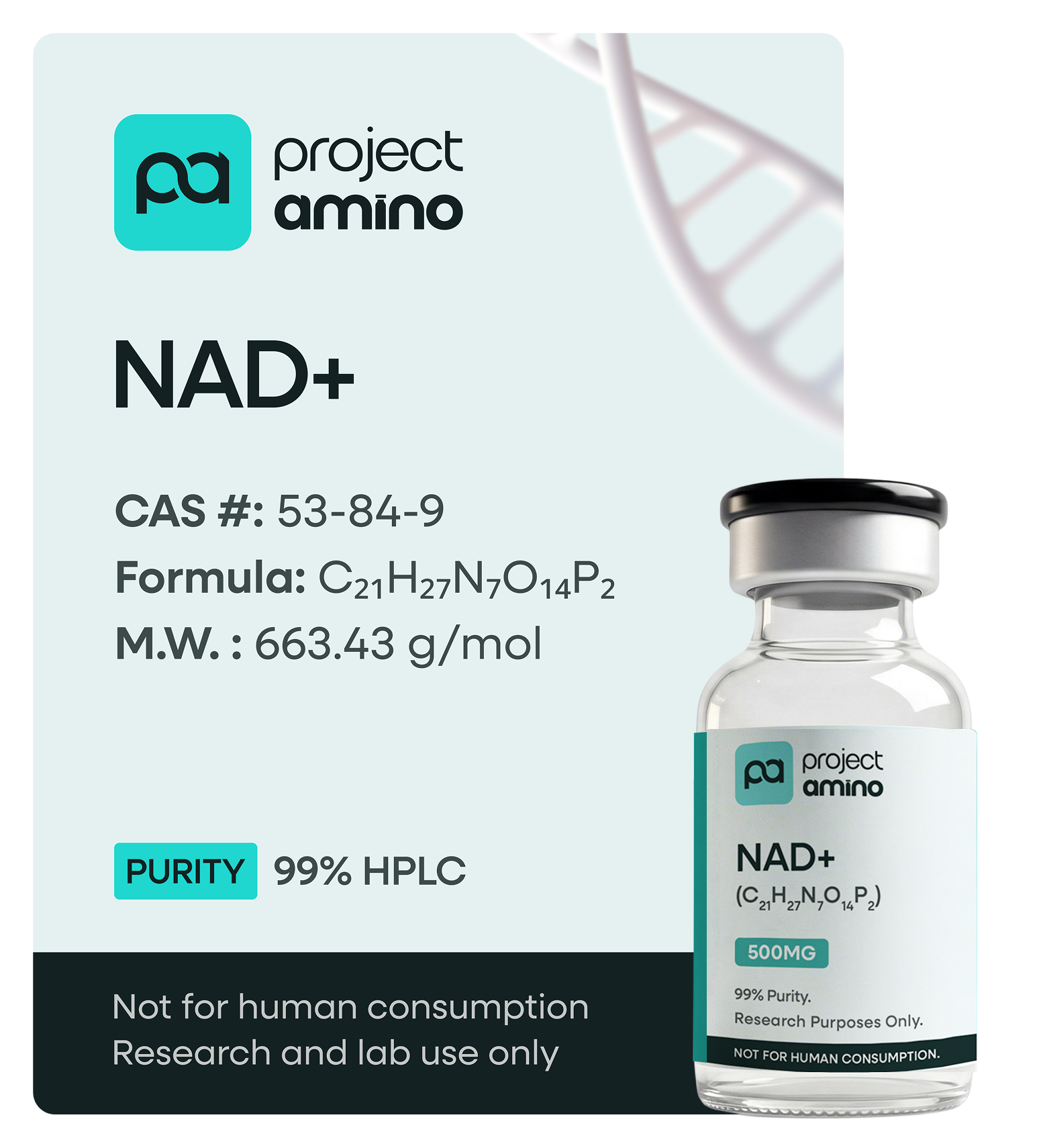
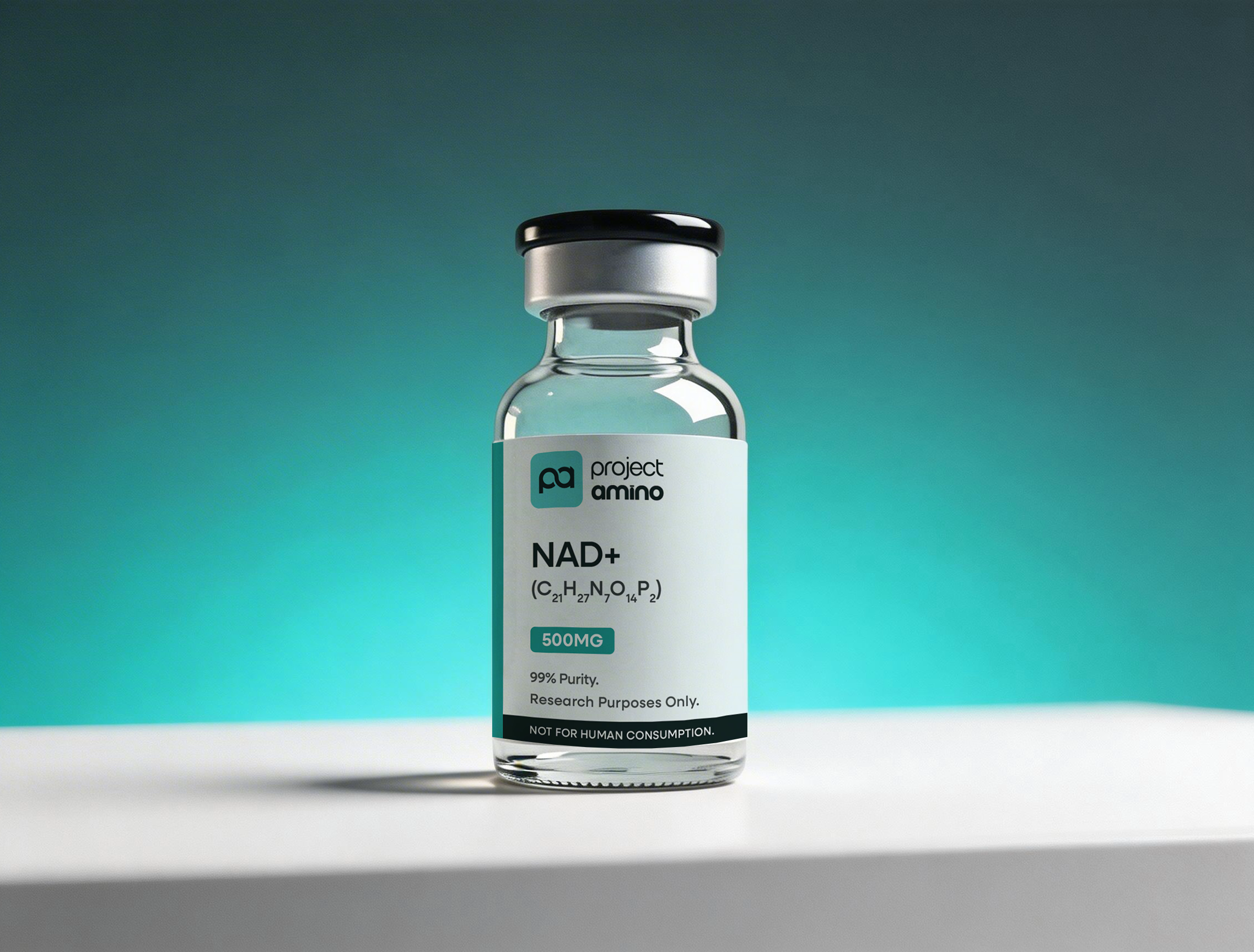
Nicotinamide adenine dinucleotide (NAD+) is a vital coenzyme in all living cells, involved in over 500 enzymatic reactions. It serves as an electron carrier in oxidative phosphorylation and acts as a substrate for regulatory enzymes like sirtuins and PARPs. NAD+ alternates between oxidized (NAD+) and reduced (NADH) forms, playing a key role in cellular energy production and redox balance. Research has investigated its impact on sirtuin activation, mitochondrial function, and cellular processes. For research use only. Not for human consumption.
Free Shipping on orders over $200
Nicotinamide adenine dinucleotide (NAD+) is an essential coenzyme found in all living cells that participates in over 500 enzymatic reactions, most critically as an electron carrier in oxidative phosphorylation and as a substrate for regulatory enzymes including sirtuins and poly(ADP-ribose) polymerases (PARPs). NAD+ alternates between its oxidized (NAD+) and reduced (NADH) forms to facilitate cellular energy production and redox balance. Cellular NAD+ levels decline with aging and metabolic dysfunction, and this decline has been associated with impaired mitochondrial function, increased oxidative stress, and reduced DNA repair capacity. Research using NAD+ supplementation models has explored its influence on sirtuin activation, mitochondrial biogenesis, cellular senescence, and neuroprotection. For research use only. Not for human consumption.
These products are for research use only and are not intended for human consumption, therapeutic use, or diagnostic purposes. All compounds described herein have not been approved by the FDA for human use. These products are strictly intended for in vitro laboratory research and analytical purposes when conducted by qualified research professionals in licensed facilities. Users are responsible for ensuring compliance with all applicable laws regarding purchase and use of these materials.
These products are for research use only and are not intended for human consumption, therapeutic use, or diagnostic purposes. All compounds described herein have not been approved by the FDA for human use. These products are strictly intended for in vitro laboratory research and analytical purposes when conducted by qualified research professionals in licensed facilities. Users are responsible for ensuring compliance with all applicable laws regarding purchase and use of these materials.