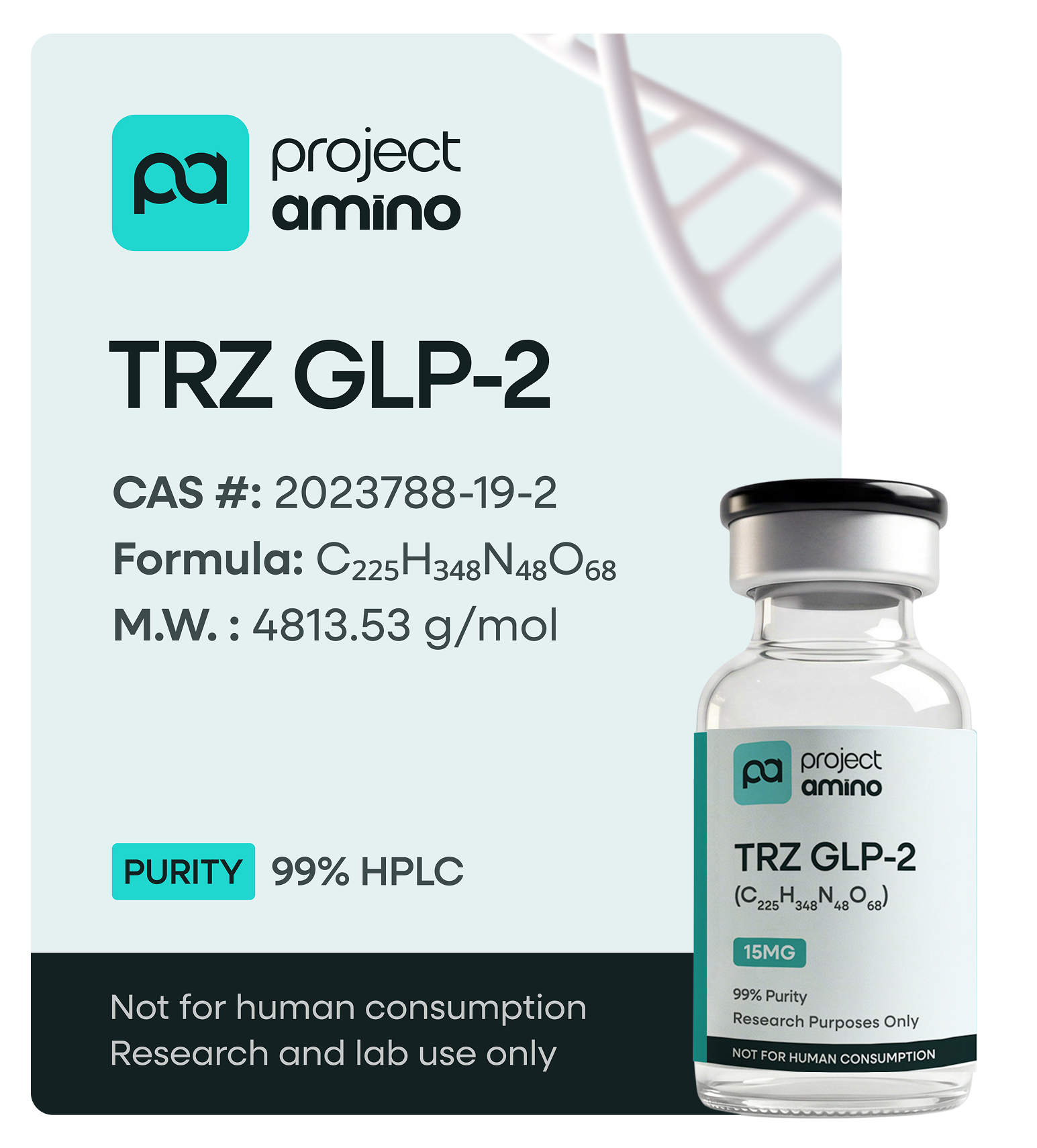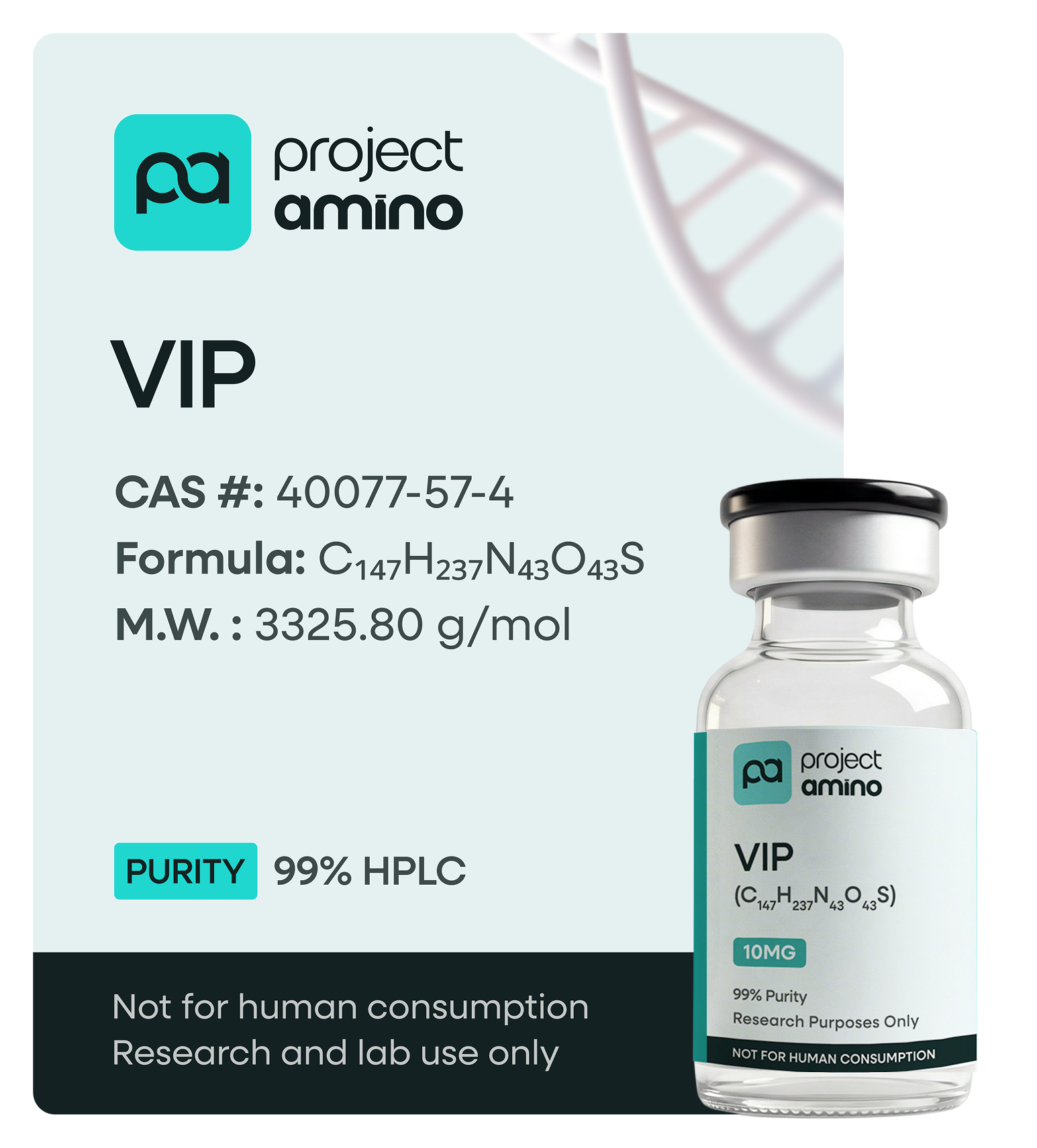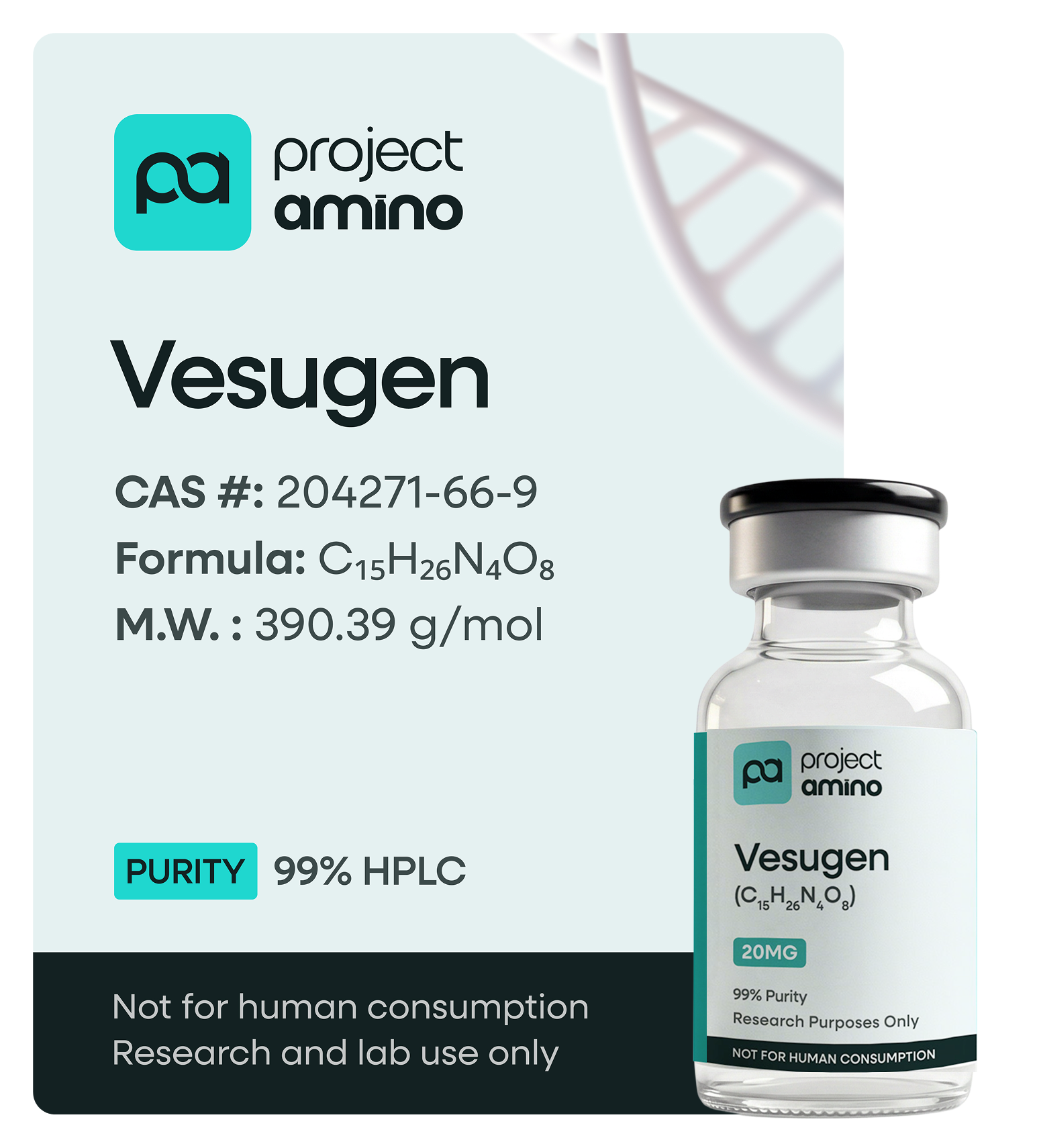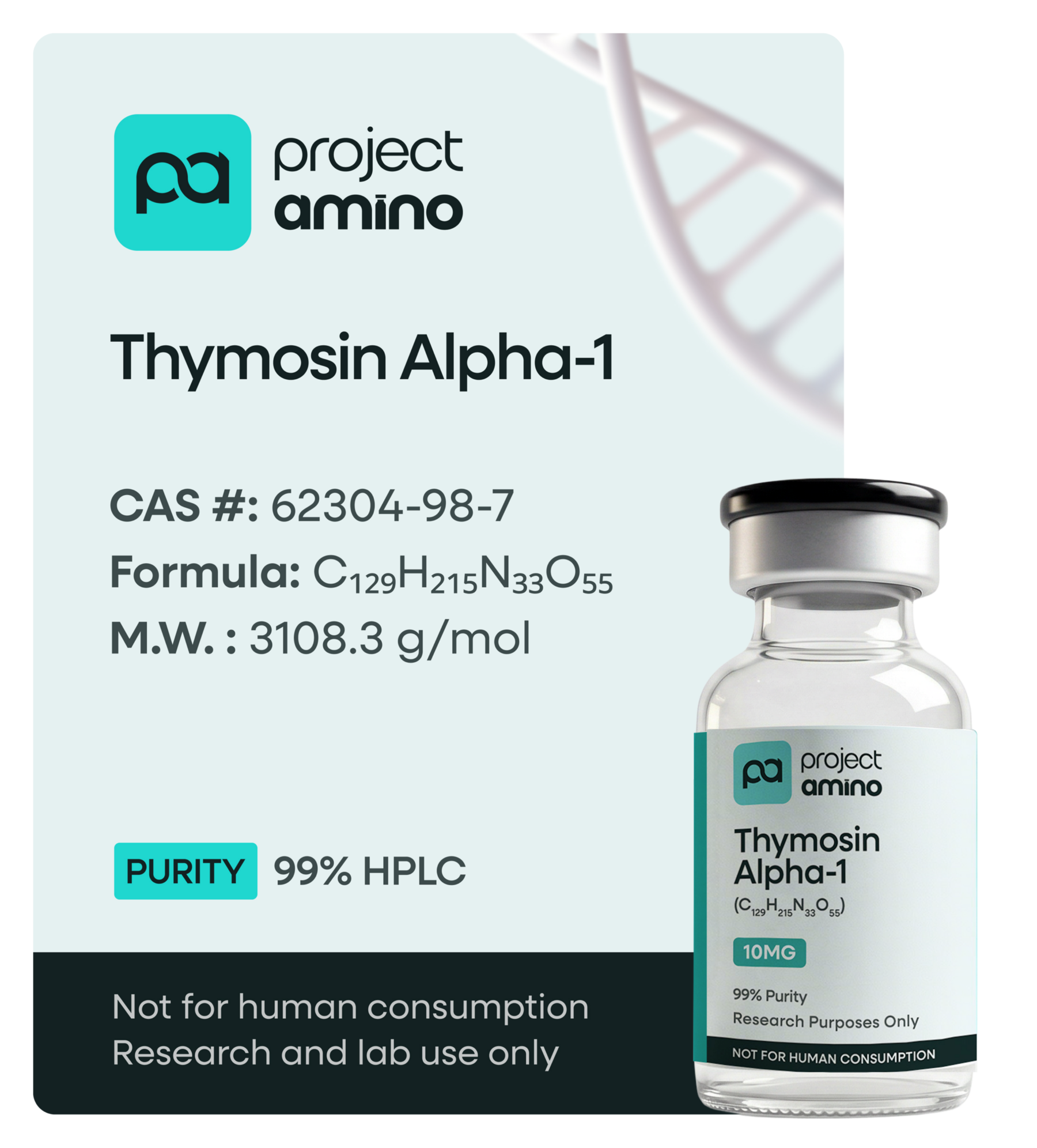


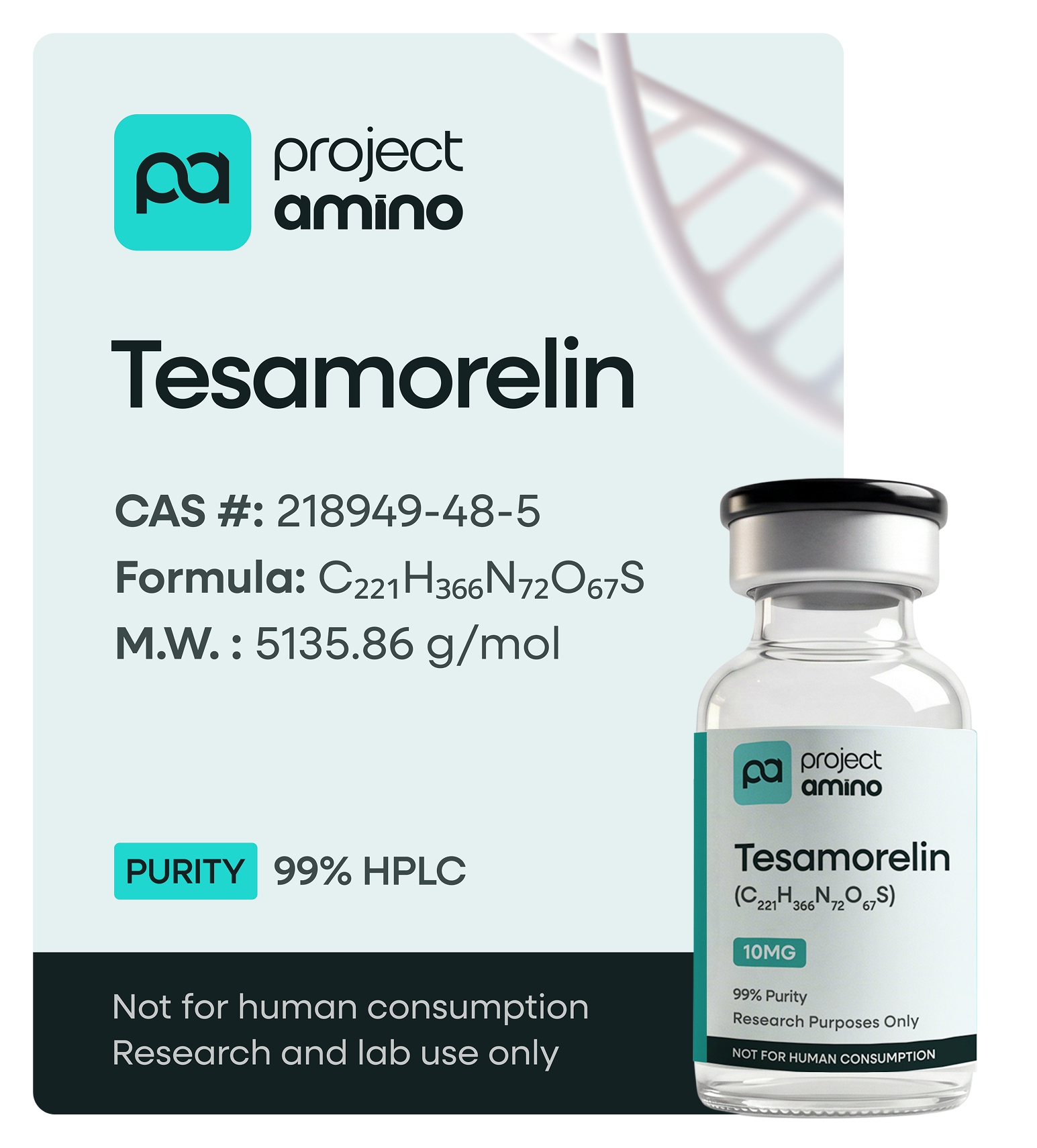
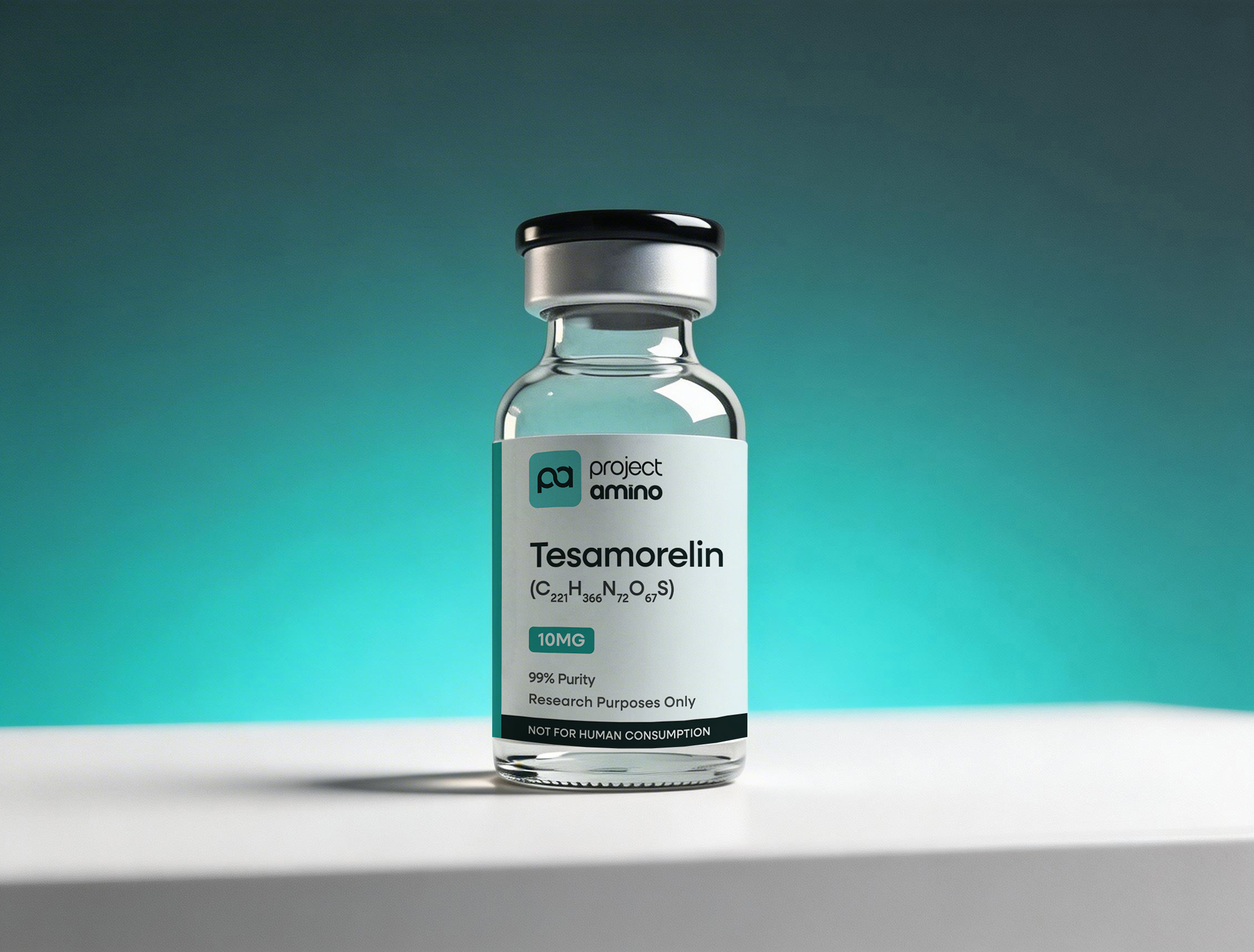
Tesamorelin is a stabilized synthetic analogue of human growth hormone-releasing hormone (GHRH 1-44), featuring a trans-3-hexenoic acid modification that enhances its half-life. It binds to pituitary GHRH receptors to stimulate the synthesis and release of endogenous growth hormone. In research environments, Tesamorelin serves as a precise tool for studying the GHRH-GH-IGF-1 axis, visceral adipose tissue regulation, lipid metabolism, and cognitive function in various models. For research use only. Not for human consumption.
Free Shipping on orders over $200
Tesamorelin is a stabilized synthetic analogue of human growth hormone-releasing hormone (GHRH 1-44) that incorporates a trans-3-hexenoic acid modification at the N-terminal tyrosine residue, which substantially extends its half-life relative to endogenous GHRH. It binds directly to pituitary GHRH receptors to stimulate the synthesis and pulsatile release of endogenous growth hormone. Tesamorelin is FDA-approved (as Egrifta SV) for the treatment of excess abdominal fat in HIV-infected patients with lipodystrophy. In research settings, it is studied as a precise tool for stimulating physiological GH secretion, investigating the GHRH-GH-IGF-1 axis, and examining visceral adipose tissue regulation, lipid metabolism, and cognitive function in preclinical and clinical models. For research use only. Not for human consumption.
These products are for research use only and are not intended for human consumption, therapeutic use, or diagnostic purposes. All compounds described herein have not been approved by the FDA for human use. These products are strictly intended for in vitro laboratory research and analytical purposes when conducted by qualified research professionals in licensed facilities. Users are responsible for ensuring compliance with all applicable laws regarding purchase and use of these materials.
These products are for research use only and are not intended for human consumption, therapeutic use, or diagnostic purposes. All compounds described herein have not been approved by the FDA for human use. These products are strictly intended for in vitro laboratory research and analytical purposes when conducted by qualified research professionals in licensed facilities. Users are responsible for ensuring compliance with all applicable laws regarding purchase and use of these materials.