

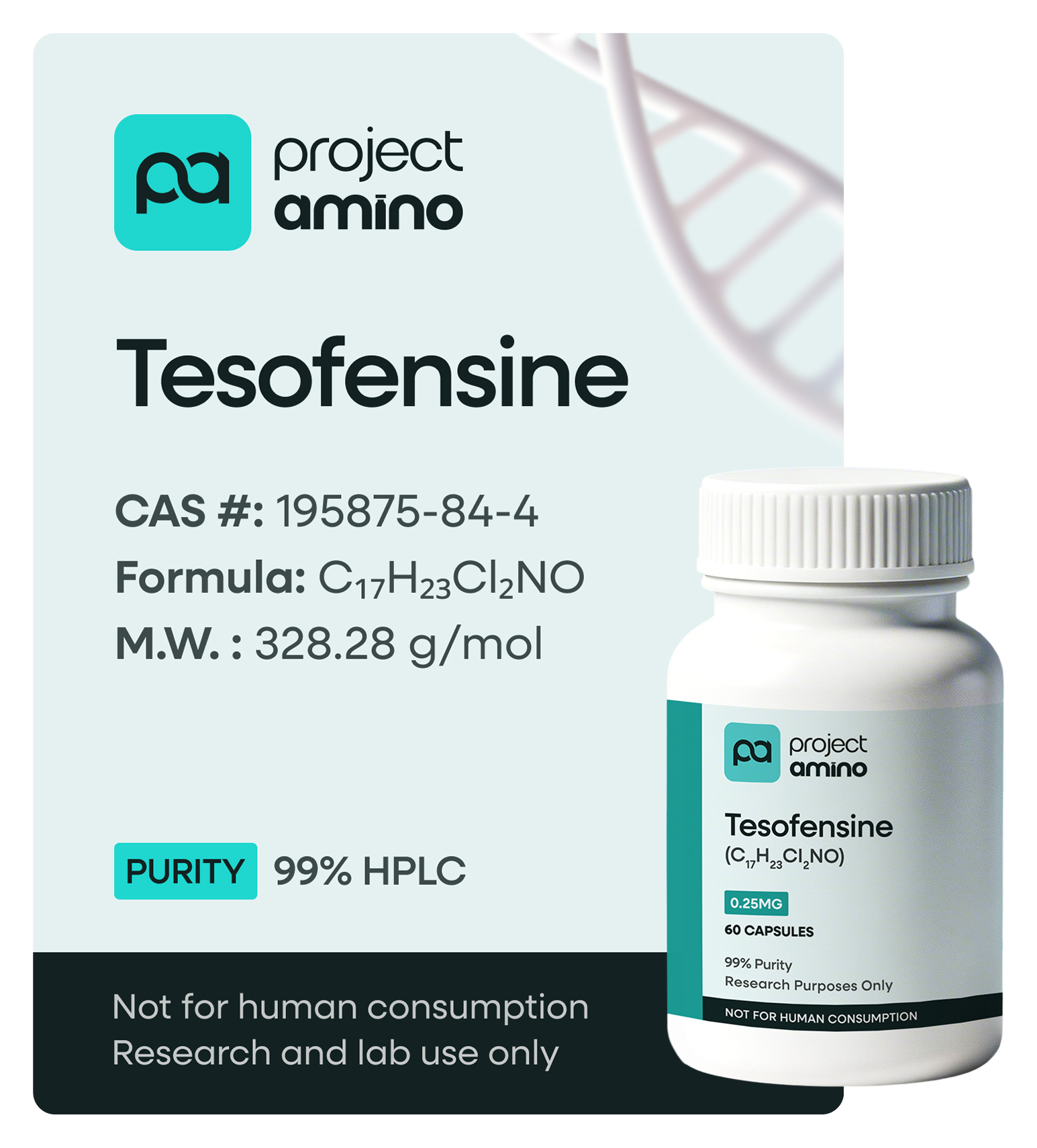
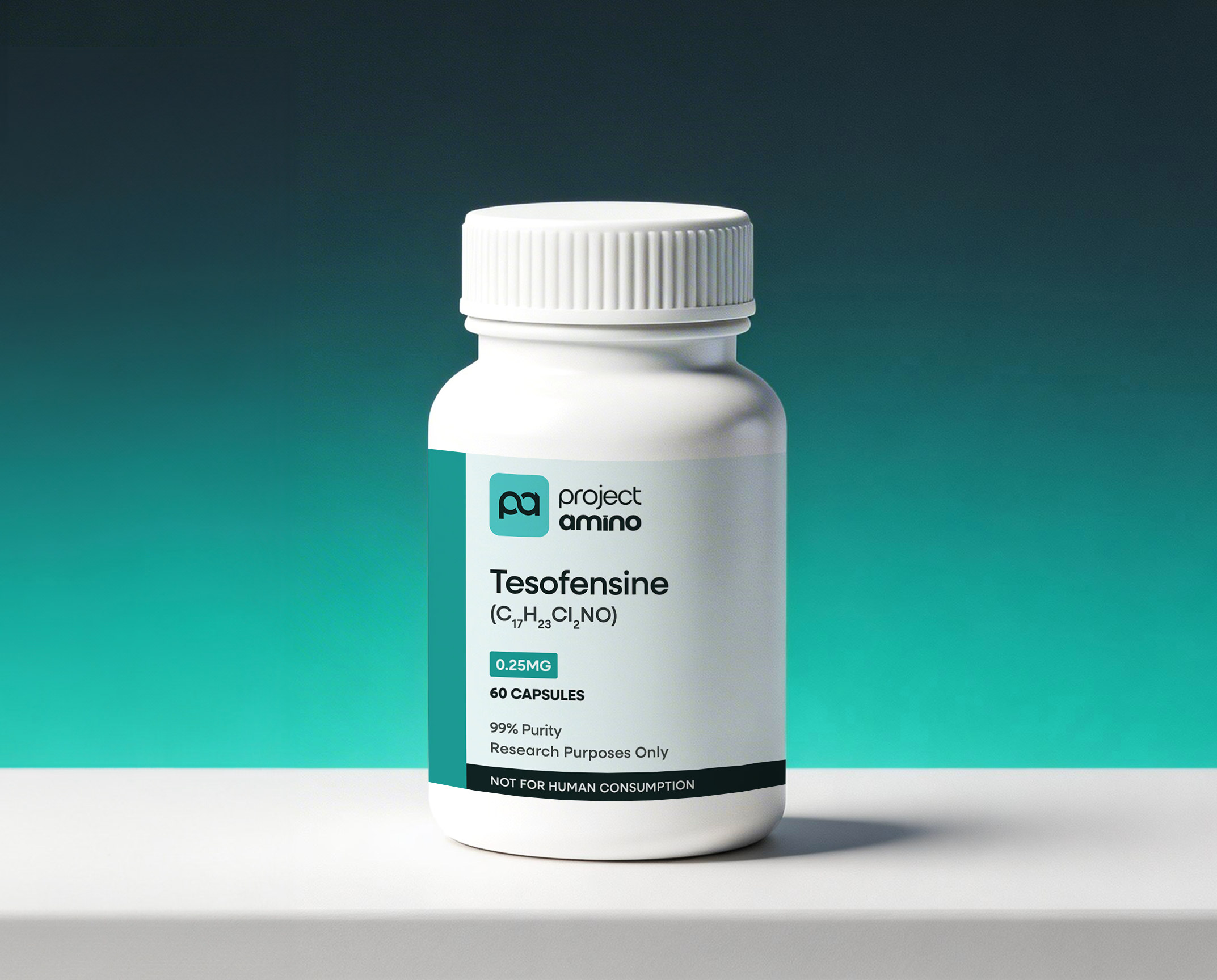
Tesofensine (NS-2330) is a triple monoamine reuptake inhibitor that selectively targets dopamine, norepinephrine, and serotonin reuptake. Initially explored for neurological conditions, it has shown promising effects in appetite modulation and fat oxidation. Unlike traditional appetite suppressants, tesofensine works through unique mechanisms, influencing hypothalamic feeding centers and enhancing satiety signaling while maintaining low stimulant effects. Its profile makes it a valuable compound for metabolic research, obesity modeling, and studies on neurotransmitter dynamics.
Free Shipping on orders over $200
Tesofensine (NS-2330) is a triple monoamine reuptake inhibitor that selectively inhibits the presynaptic reuptake of dopamine, norepinephrine, and serotonin. Originally investigated for neurological conditions, tesofensine demonstrated potent appetite-suppressing effects in clinical research, producing weight loss approximately twice that of currently available pharmaceuticals. This compound operates through distinct mechanisms from traditional appetite suppressants, modulating hypothalamic feeding centers and increasing satiety signaling without significant stimulant effects. Research indicates tesofensine enhances fat oxidation while producing minimal increases in heart rate or cortisol compared to structural analogs. Preclinical and clinical investigations support its utility in metabolic research, obesity modeling, and neurotransmitter dynamics research.
These products are for research use only and are not intended for human consumption, therapeutic use, or diagnostic purposes. All compounds described herein have not been approved by the FDA for human use. These products are strictly intended for in vitro laboratory research and analytical purposes when conducted by qualified research professionals in licensed facilities. Users are responsible for ensuring compliance with all applicable laws regarding purchase and use of these materials.
These products are for research use only and are not intended for human consumption, therapeutic use, or diagnostic purposes. All compounds described herein have not been approved by the FDA for human use. These products are strictly intended for in vitro laboratory research and analytical purposes when conducted by qualified research professionals in licensed facilities. Users are responsible for ensuring compliance with all applicable laws regarding purchase and use of these materials.