

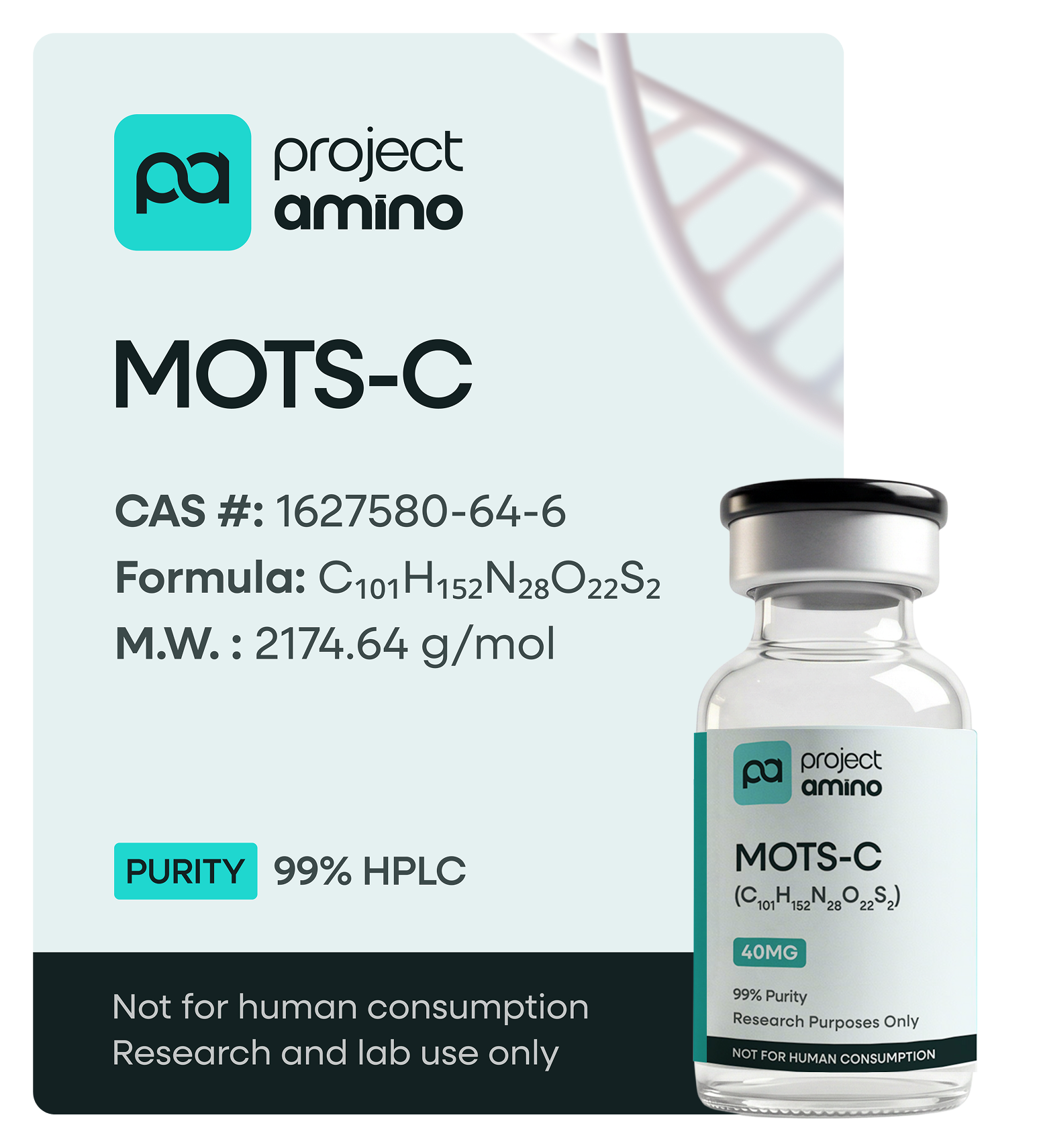
MOTS-c (Mitochondrial ORF of the 12S rRNA Type-C) is a 16-amino acid peptide encoded in the mitochondrial genome, making it one of the few peptides derived from mitochondrial DNA. Identified in 2015, it is classified as a mitochondrial-derived peptide (MDP) and acts as a signaling molecule that moves from mitochondria to the nucleus during metabolic stress. MOTS-c is known for its role in the AMPK pathway and is responsive to exercise, with levels increasing during physical activity. For research use only.
Free Shipping on orders over $200
MOTS-c (Mitochondrial ORF of the 12S rRNA Type-C) is a 16-amino acid peptide encoded within the mitochondrial genome’s 12S rRNA gene, making it one of the few known peptides derived from mitochondrial DNA rather than nuclear DNA. First characterized in 2015, MOTS-c is classified as a mitochondrial-derived peptide (MDP) and functions as an endocrine-like signaling molecule that translocates from the mitochondria to the cell nucleus in response to metabolic stress. Its primary studied mechanisms involve activation of the AMPK pathway, promotion of glucose uptake in skeletal muscle, and regulation of insulin sensitivity. Research has also identified MOTS-c as an exercise-responsive peptide, with circulating levels increasing during physical activity in humans. For research use only. Not for human consumption.
These products are for research use only and are not intended for human consumption, therapeutic use, or diagnostic purposes. All compounds described herein have not been approved by the FDA for human use. These products are strictly intended for in vitro laboratory research and analytical purposes when conducted by qualified research professionals in licensed facilities. Users are responsible for ensuring compliance with all applicable laws regarding purchase and use of these materials.
These products are for research use only and are not intended for human consumption, therapeutic use, or diagnostic purposes. All compounds described herein have not been approved by the FDA for human use. These products are strictly intended for in vitro laboratory research and analytical purposes when conducted by qualified research professionals in licensed facilities. Users are responsible for ensuring compliance with all applicable laws regarding purchase and use of these materials.