

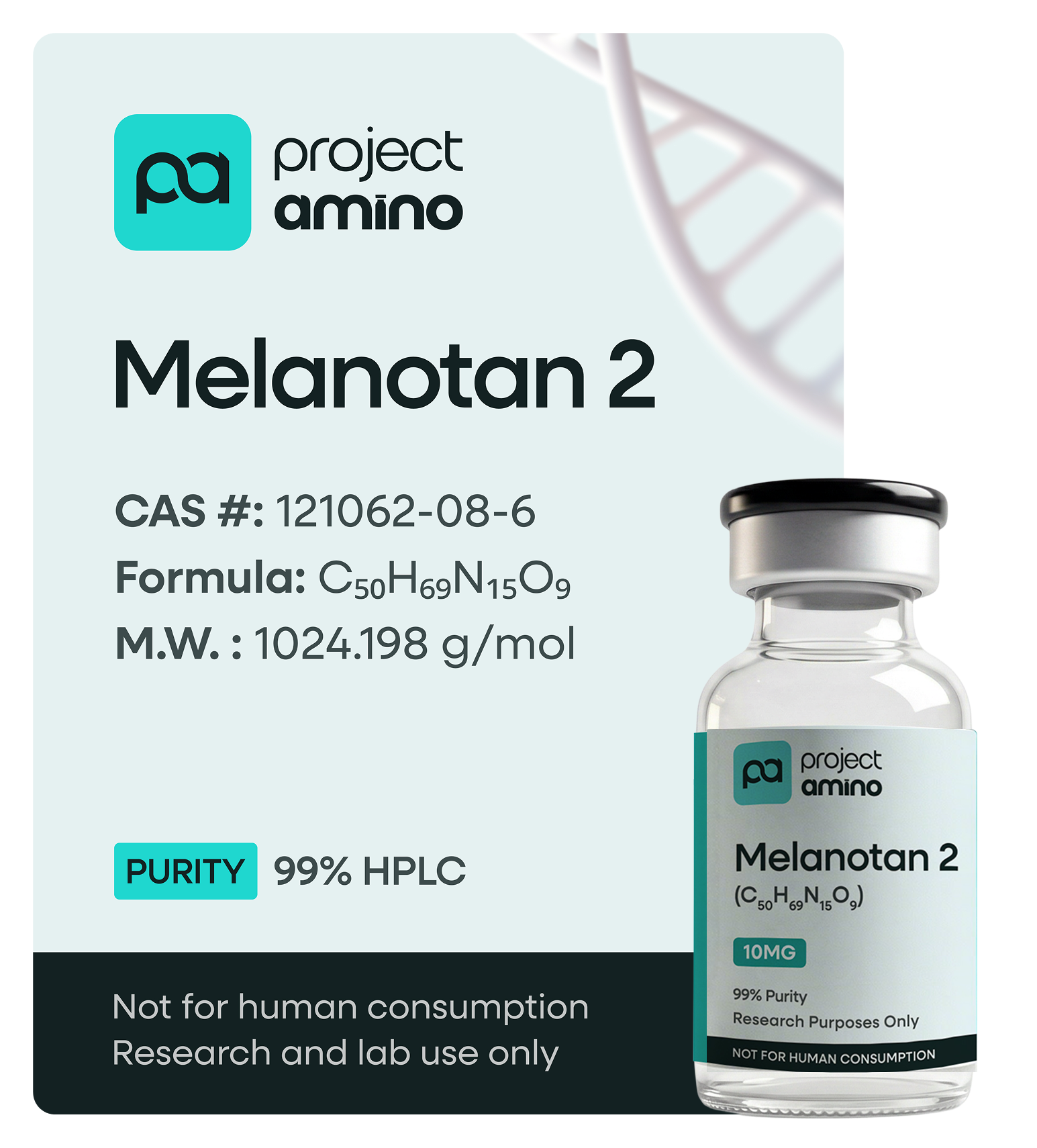
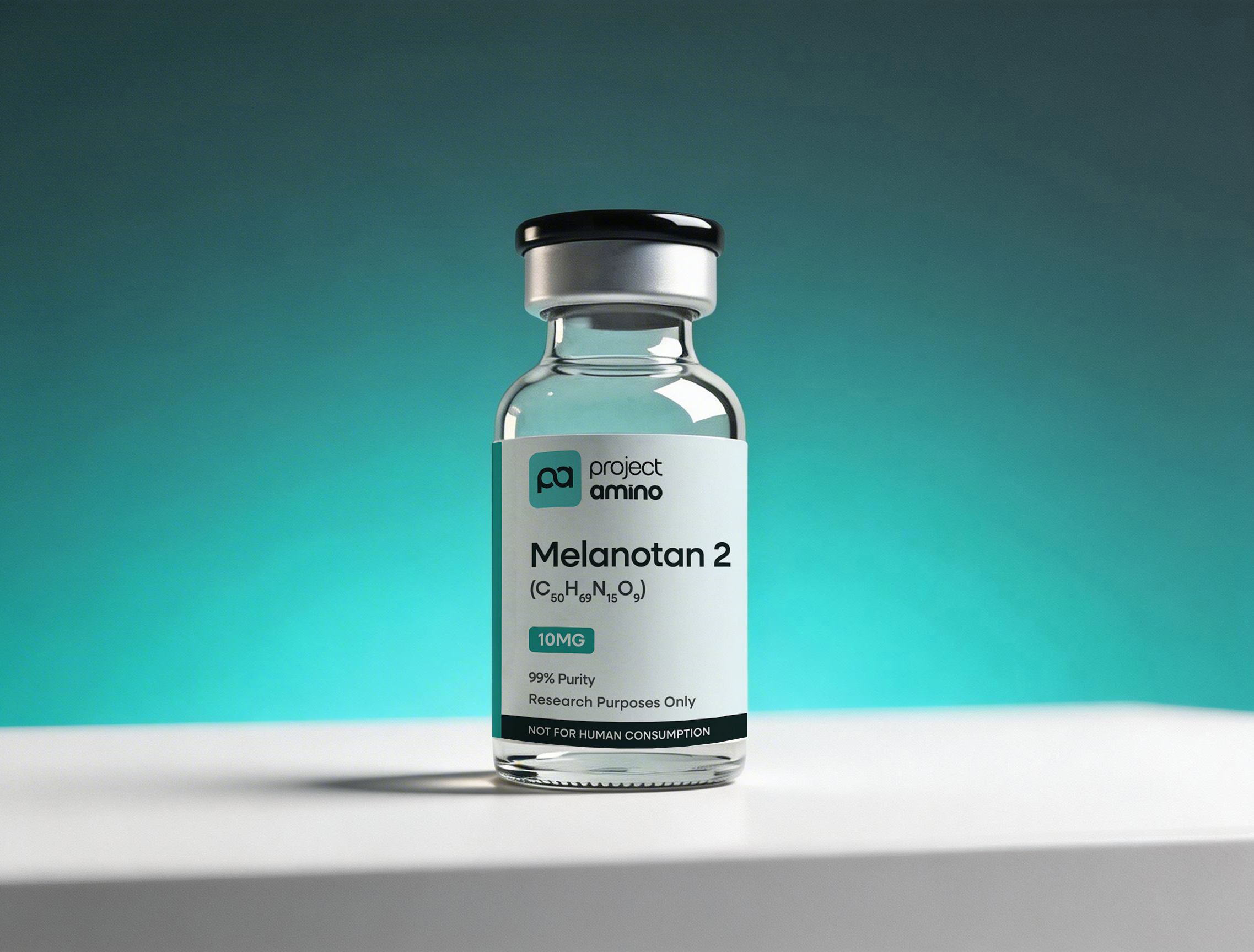
Melanotan 2 (MT-2) is a synthetic cyclic heptapeptide analogue of alpha-MSH, designed for research purposes. It features a cyclized structure that enhances metabolic resistance and interacts with multiple melanocortin receptor subtypes, including MC1R, MC3R, MC4R, and MC5R. Developed as a successor to Melanotan 1, MT-2 aims to deliver similar melanogenic activity with lower doses. Additionally, PT-141 (bremelanotide) is a metabolite of MT-2. For research use only. Not for human consumption.
Free Shipping on orders over $200
Melanotan 2 (MT-2) is a synthetic cyclic heptapeptide analogue of alpha-MSH, structurally derived from the same active core sequence as Melanotan 1 but in a cyclized, shortened form that confers greater metabolic resistance and receptor promiscuity. MT-2 acts as a non-selective agonist at multiple melanocortin receptor subtypes, including MC1R, MC3R, MC4R, and MC5R. It was developed as a successor to MT-1 with a focus on achieving comparable melanogenic activity at lower cumulative doses. In preclinical research, MT-2 has been studied in the context of melanocortin receptor pharmacology, sexual behavior-related CNS signaling (primarily via MC4R), and pigmentation biology. PT-141 (bremelanotide) is a metabolite of MT-2. For research use only. Not for human consumption.
These products are for research use only and are not intended for human consumption, therapeutic use, or diagnostic purposes. All compounds described herein have not been approved by the FDA for human use. These products are strictly intended for in vitro laboratory research and analytical purposes when conducted by qualified research professionals in licensed facilities. Users are responsible for ensuring compliance with all applicable laws regarding purchase and use of these materials.
These products are for research use only and are not intended for human consumption, therapeutic use, or diagnostic purposes. All compounds described herein have not been approved by the FDA for human use. These products are strictly intended for in vitro laboratory research and analytical purposes when conducted by qualified research professionals in licensed facilities. Users are responsible for ensuring compliance with all applicable laws regarding purchase and use of these materials.