

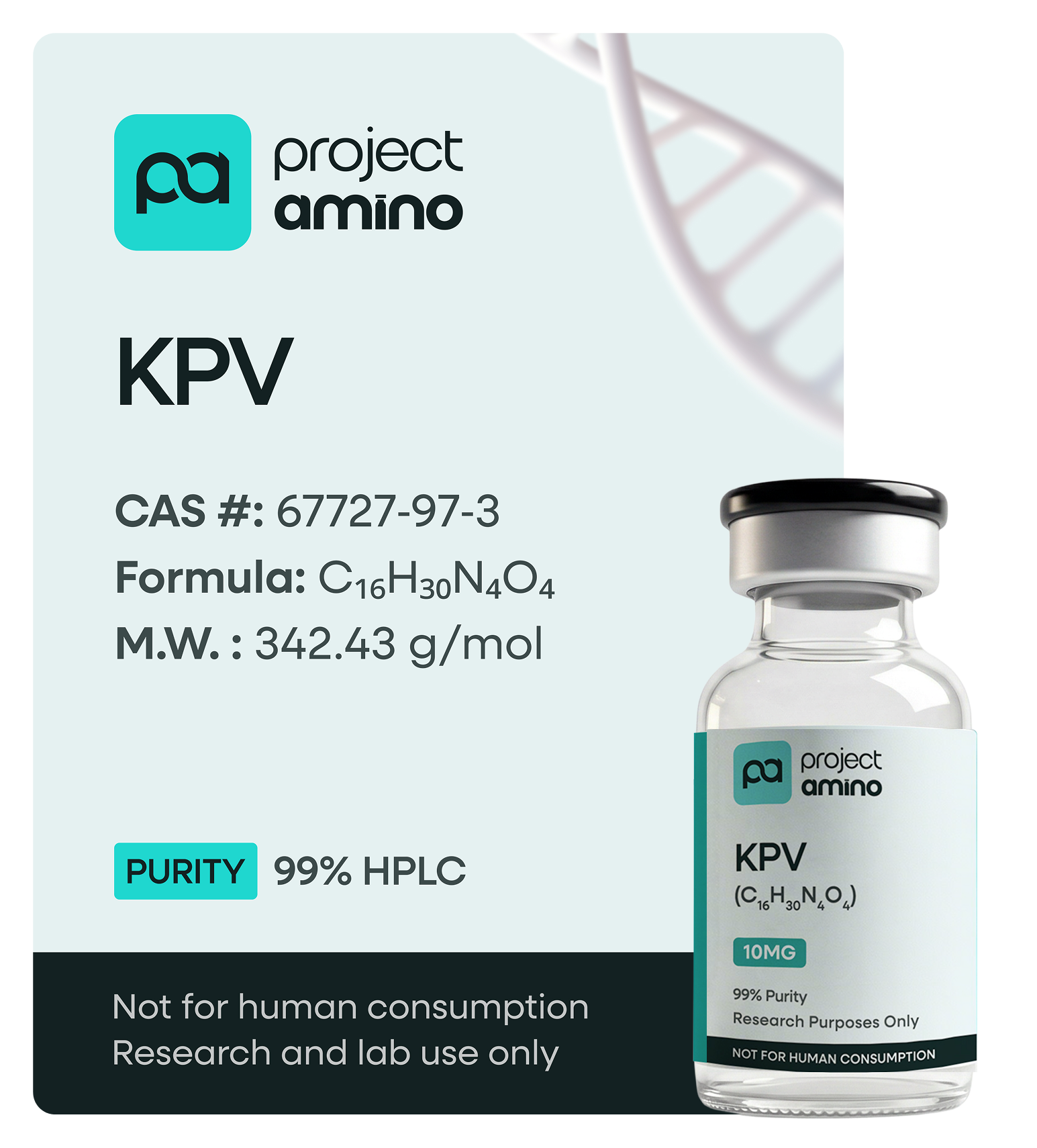
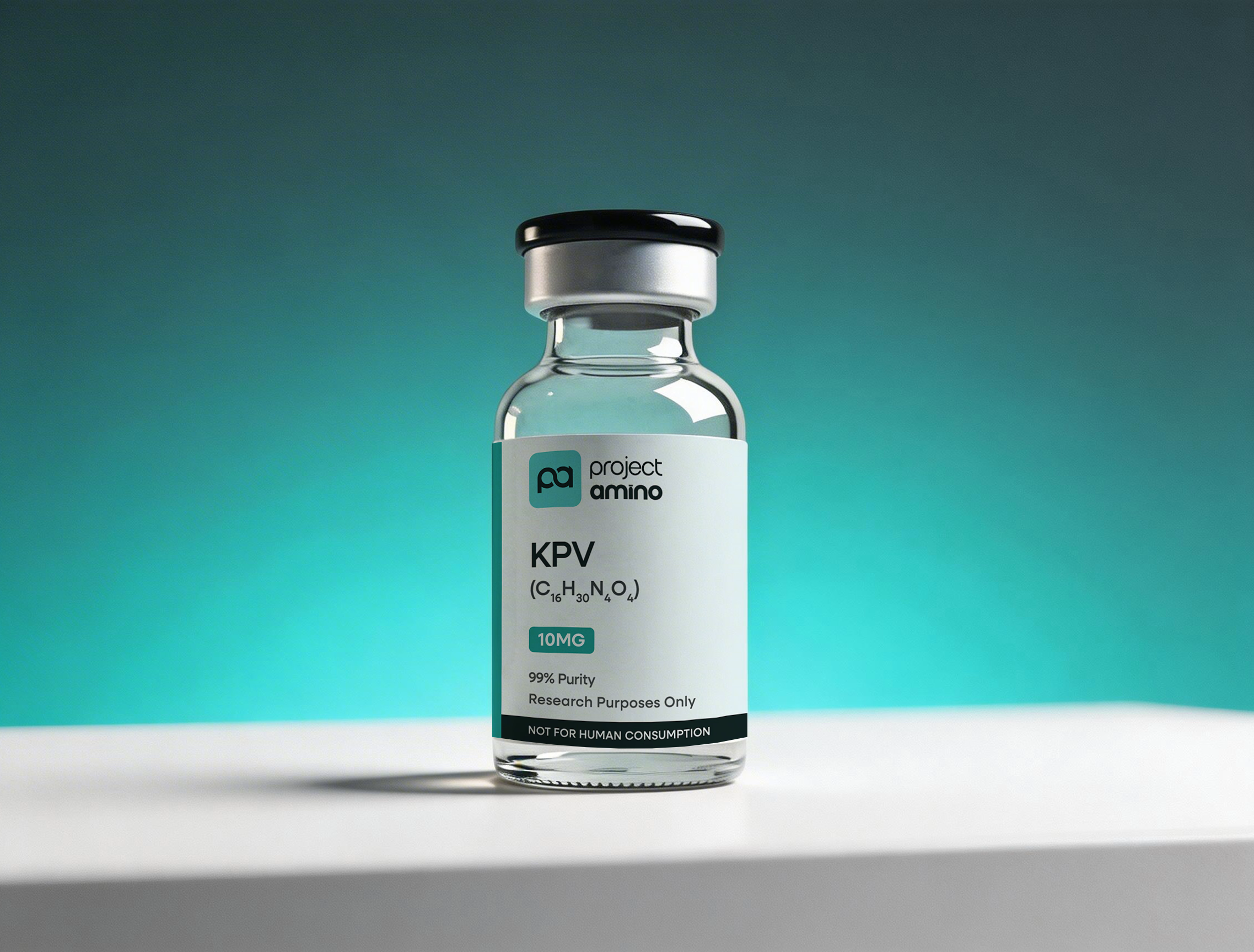
KPV (Lys-Pro-Val) is a naturally occurring tripeptide derived from the C-terminal sequence of alpha-melanocyte-stimulating hormone. It is the minimal active fragment of alpha-MSH, known for its role in anti-inflammatory research. KPV has been explored for its effects on inflammatory signaling and cytokine modulation in preclinical studies. Its small size, water solubility, and stability make it an excellent tool for investigating peptide-mediated inflammation resolution in cellular and animal research. For research use only. Not for human consumption.
Free Shipping on orders over $200
KPV (Lys-Pro-Val) is a naturally occurring tripeptide derived from the C-terminal alpha-MSH (alpha-melanocyte-stimulating hormone) sequence. It represents the minimal active fragment of alpha-MSH that retains anti-inflammatory bioactivity, acting through melanocortin receptor-independent mechanisms in addition to partial MC1R engagement. KPV has been studied for its ability to inhibit NF-kB-mediated inflammatory signaling, modulate cytokine production, and exert protective effects on intestinal epithelial cells in preclinical models of colitis and gut inflammation. Its small molecular size, water solubility, and stability make it an accessible tool for studying peptide-mediated resolution of inflammation in cellular and animal research systems. For research use only. Not for human consumption.
These products are for research use only and are not intended for human consumption, therapeutic use, or diagnostic purposes. All compounds described herein have not been approved by the FDA for human use. These products are strictly intended for in vitro laboratory research and analytical purposes when conducted by qualified research professionals in licensed facilities. Users are responsible for ensuring compliance with all applicable laws regarding purchase and use of these materials.
These products are for research use only and are not intended for human consumption, therapeutic use, or diagnostic purposes. All compounds described herein have not been approved by the FDA for human use. These products are strictly intended for in vitro laboratory research and analytical purposes when conducted by qualified research professionals in licensed facilities. Users are responsible for ensuring compliance with all applicable laws regarding purchase and use of these materials.