

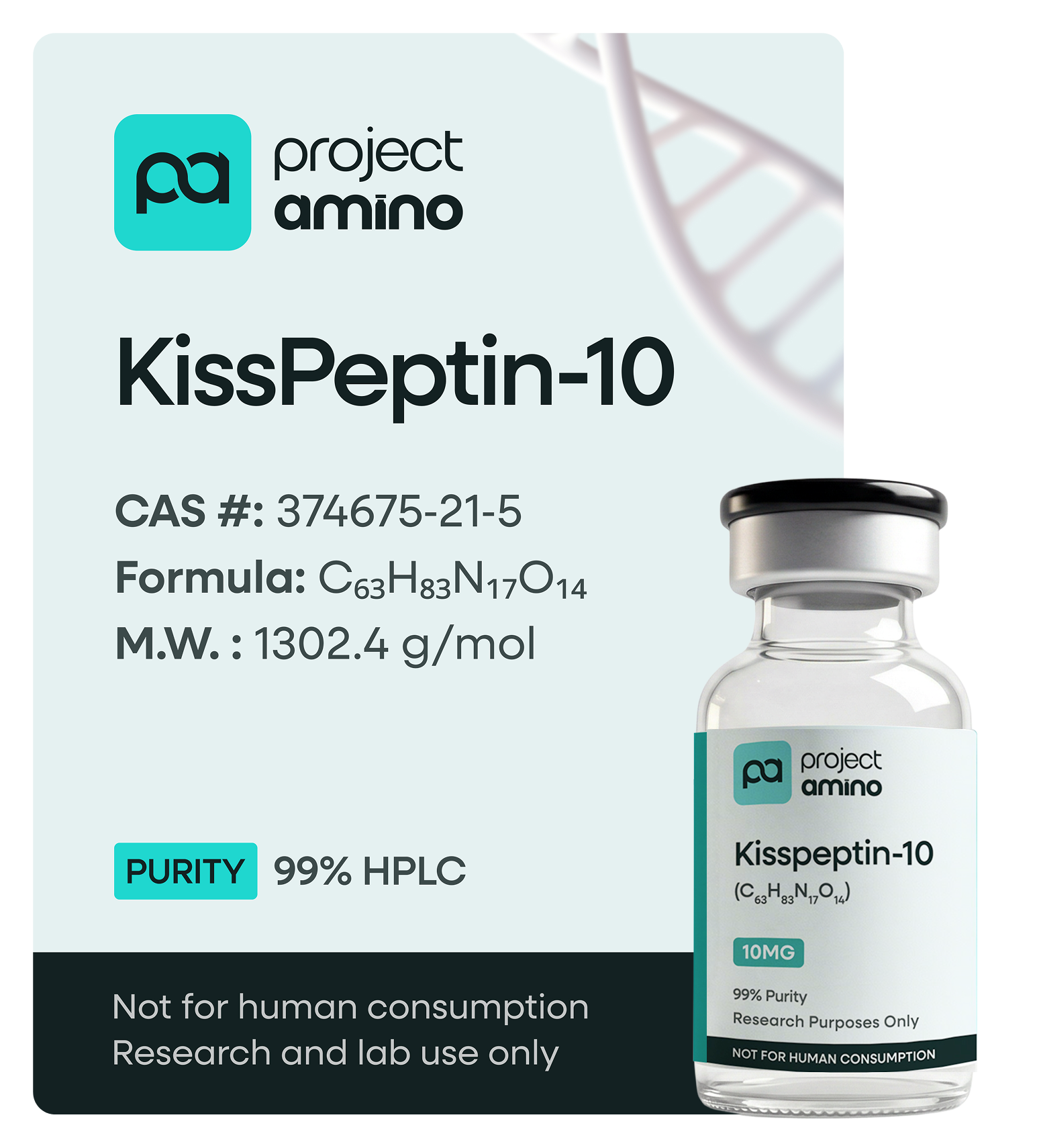
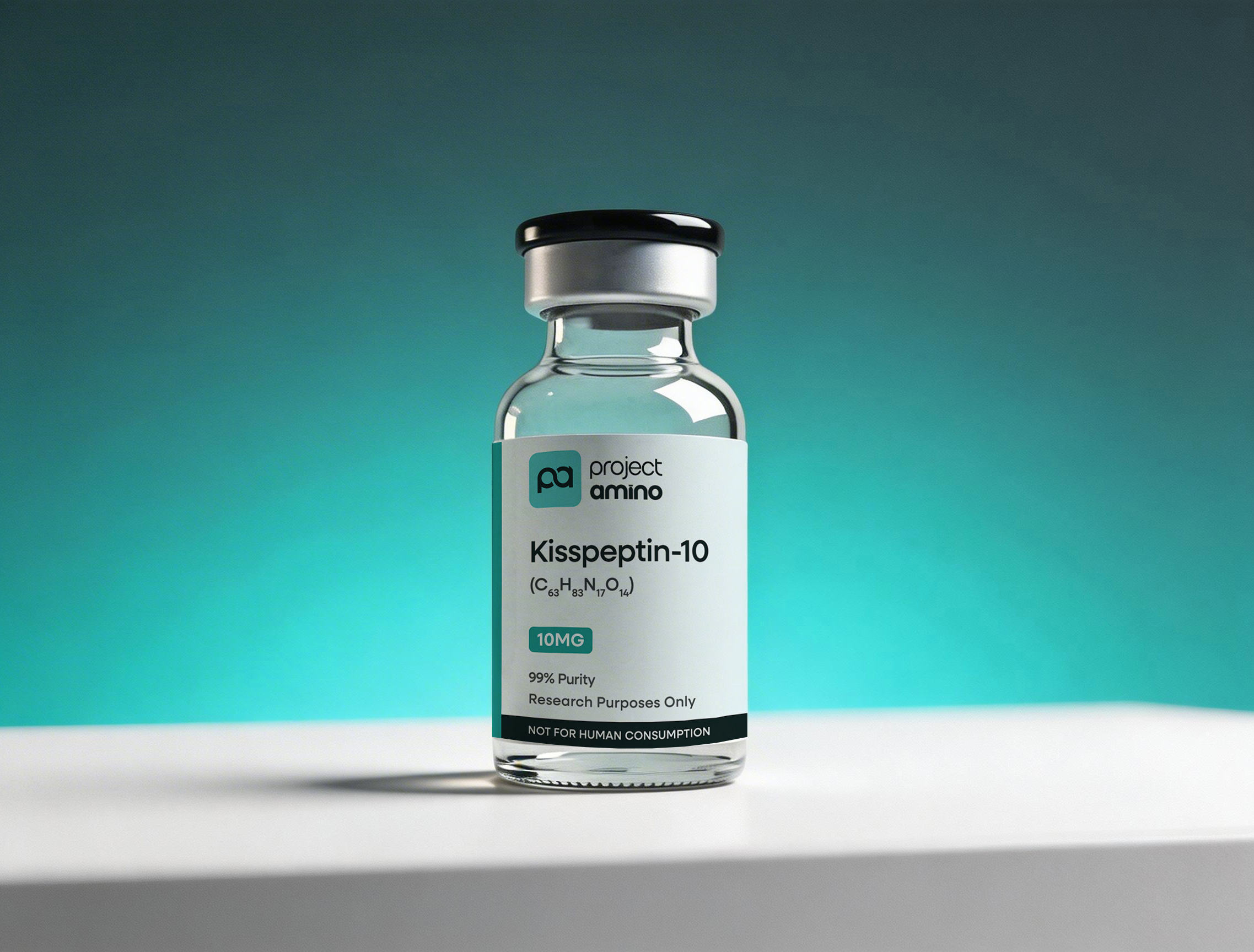
Kisspeptin-10 (KP-10) is a decapeptide derived from the Kiss1 gene, representing the shortest bioactive fragment of the kisspeptin family. It binds with high affinity to the G-protein-coupled receptor GPR54, triggering key intracellular signaling pathways. Recognized for its role in the hypothalamic regulation of gonadotropin-releasing hormone (GnRH) secretion, KP-10 is a valuable research tool in reproductive endocrinology. Additionally, it has been explored in studies related to tumor suppression, osteoblast differentiation, and peripheral vascular biology. For laboratory research use only.
Free Shipping on orders over $200
Kisspeptin-10 (KP-10) is a decapeptide derived from the proteolytic cleavage of the Kiss1 gene-encoded precursor protein kisspeptin-54. It represents the shortest bioactive fragment of the kisspeptin family and binds with high affinity to the G-protein-coupled receptor GPR54 (also known as KISS1R), triggering intracellular signaling cascades including IP3-mediated calcium mobilization and PKC activation. Kisspeptin-10 plays a recognized role in the hypothalamic regulation of gonadotropin-releasing hormone (GnRH) secretion, making it a key research tool in reproductive endocrinology. It has also been studied in the context of tumor suppression, osteoblast differentiation, and peripheral vascular biology. This product is for laboratory research use only and is not intended for human consumption.
These products are for research use only and are not intended for human consumption, therapeutic use, or diagnostic purposes. All compounds described herein have not been approved by the FDA for human use. These products are strictly intended for in vitro laboratory research and analytical purposes when conducted by qualified research professionals in licensed facilities. Users are responsible for ensuring compliance with all applicable laws regarding purchase and use of these materials.
These products are for research use only and are not intended for human consumption, therapeutic use, or diagnostic purposes. All compounds described herein have not been approved by the FDA for human use. These products are strictly intended for in vitro laboratory research and analytical purposes when conducted by qualified research professionals in licensed facilities. Users are responsible for ensuring compliance with all applicable laws regarding purchase and use of these materials.