

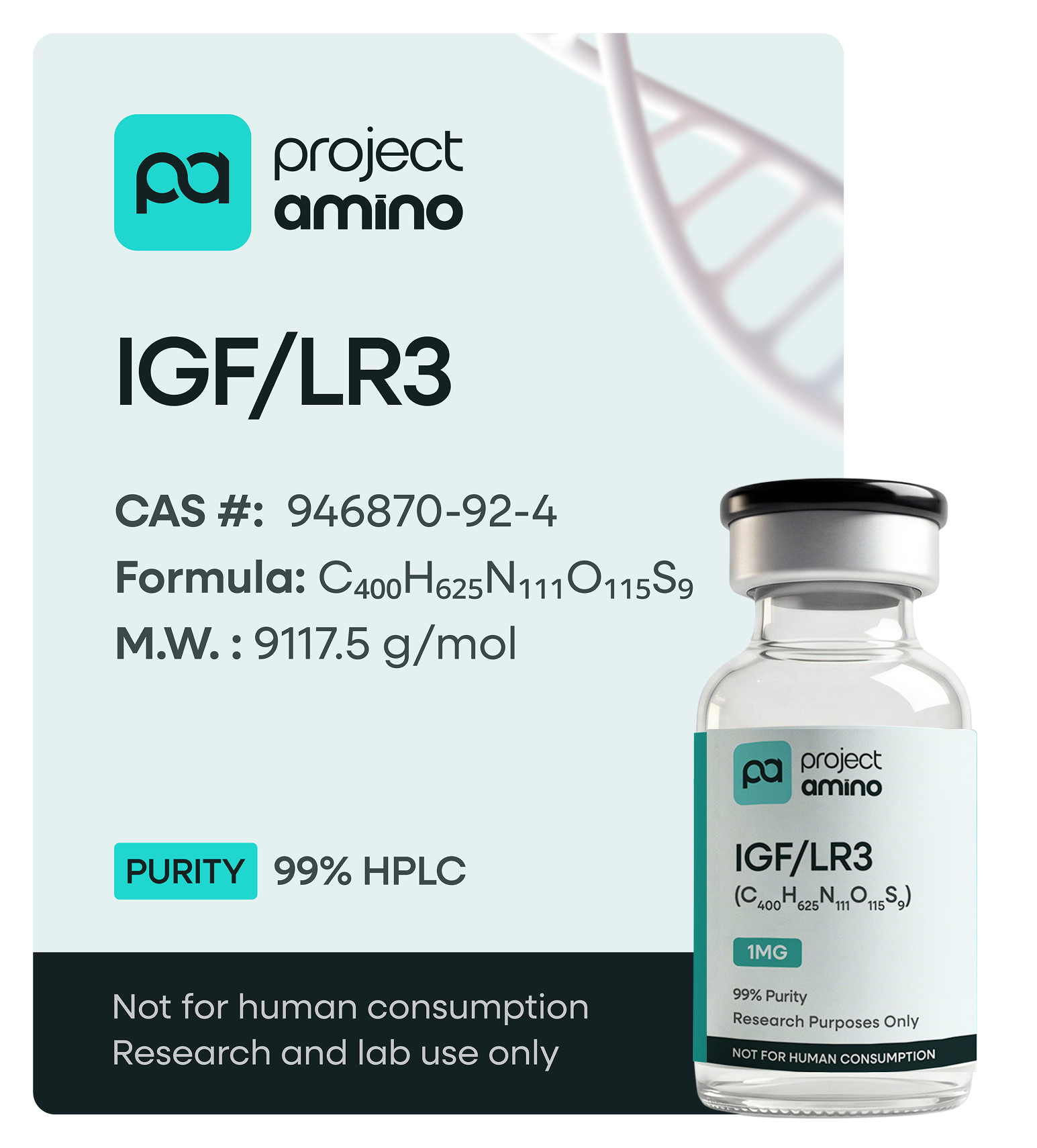
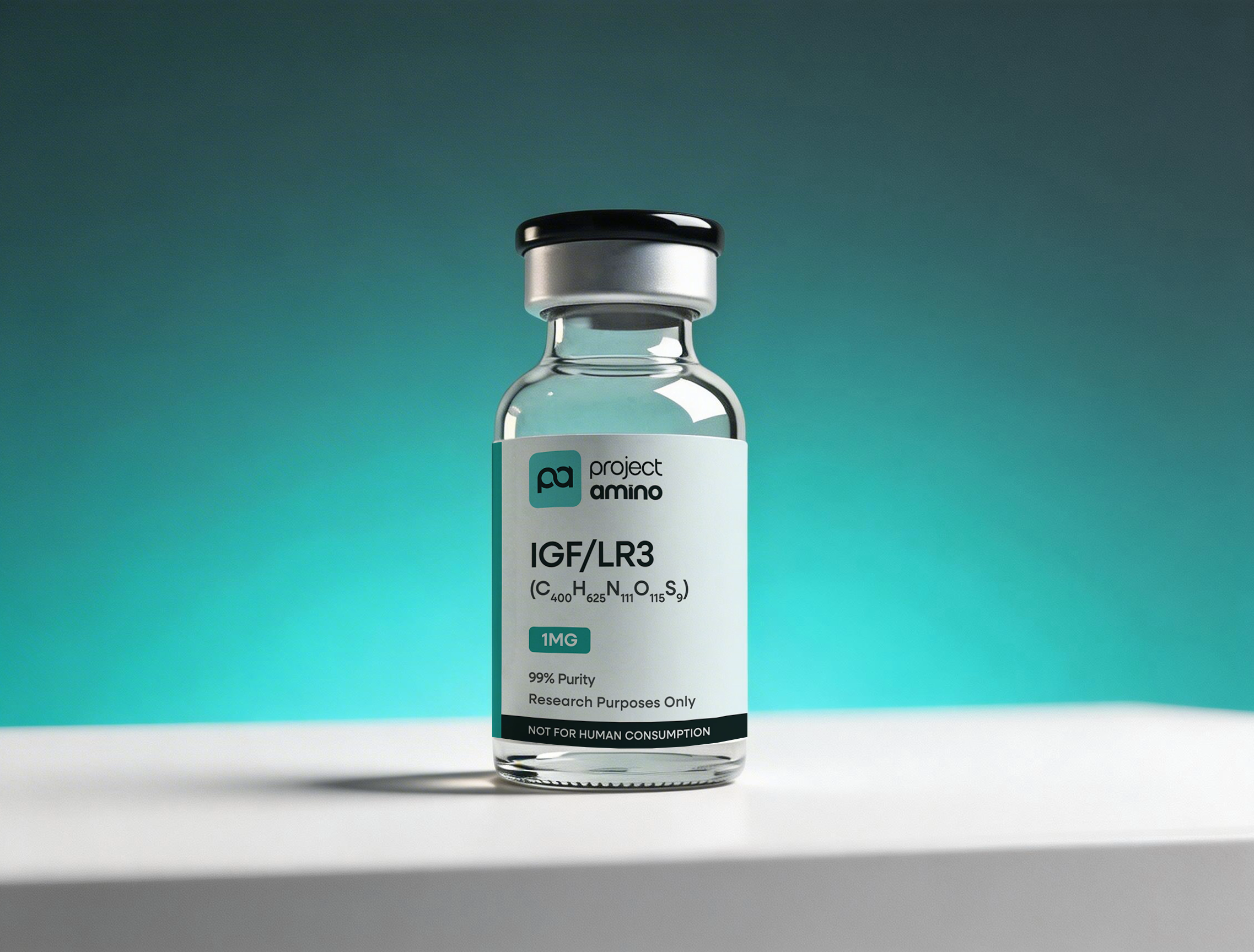
IGF-1 LR3 (Long Arginine 3-Insulin-Like Growth Factor-1) is a synthetic 83-amino acid analogue of human IGF-1, featuring modifications that enhance its functional activity in experimental systems. With an arginine substitution at position 3 and a 13-amino acid N-terminal extension, it displays reduced binding affinity to IGF-binding proteins, activating the IGF-1 receptor and initiating key signaling pathways. IGF-1 LR3 is approximately three times more potent than native IGF-1 and is utilized in cell culture models for studying various cellular processes. For research use only. Not for human consumption.
Free Shipping on orders over $200
IGF-1 LR3 (Long Arginine 3-Insulin-Like Growth Factor-1) is a synthetic 83-amino acid analogue of human IGF-1, engineered with two key modifications: an arginine substitution at position 3 (replacing glutamic acid) and a 13-amino acid N-terminal extension. These changes significantly reduce its binding affinity to IGF-binding proteins (IGFBPs 1 through 6), extending its functional activity in experimental systems. IGF-1 LR3 activates the IGF-1 receptor (IGF-1R) and initiates downstream signaling through the PI3K/Akt and MAPK/ERK pathways. It is approximately three times more potent than native IGF-1 in cell-based assays and possesses a substantially longer half-life. It is widely used in cell culture models studying proliferation, differentiation, and survival signaling across multiple tissue types. For research use only. Not for human consumption.
These products are for research use only and are not intended for human consumption, therapeutic use, or diagnostic purposes. All compounds described herein have not been approved by the FDA for human use. These products are strictly intended for in vitro laboratory research and analytical purposes when conducted by qualified research professionals in licensed facilities. Users are responsible for ensuring compliance with all applicable laws regarding purchase and use of these materials.
These products are for research use only and are not intended for human consumption, therapeutic use, or diagnostic purposes. All compounds described herein have not been approved by the FDA for human use. These products are strictly intended for in vitro laboratory research and analytical purposes when conducted by qualified research professionals in licensed facilities. Users are responsible for ensuring compliance with all applicable laws regarding purchase and use of these materials.