

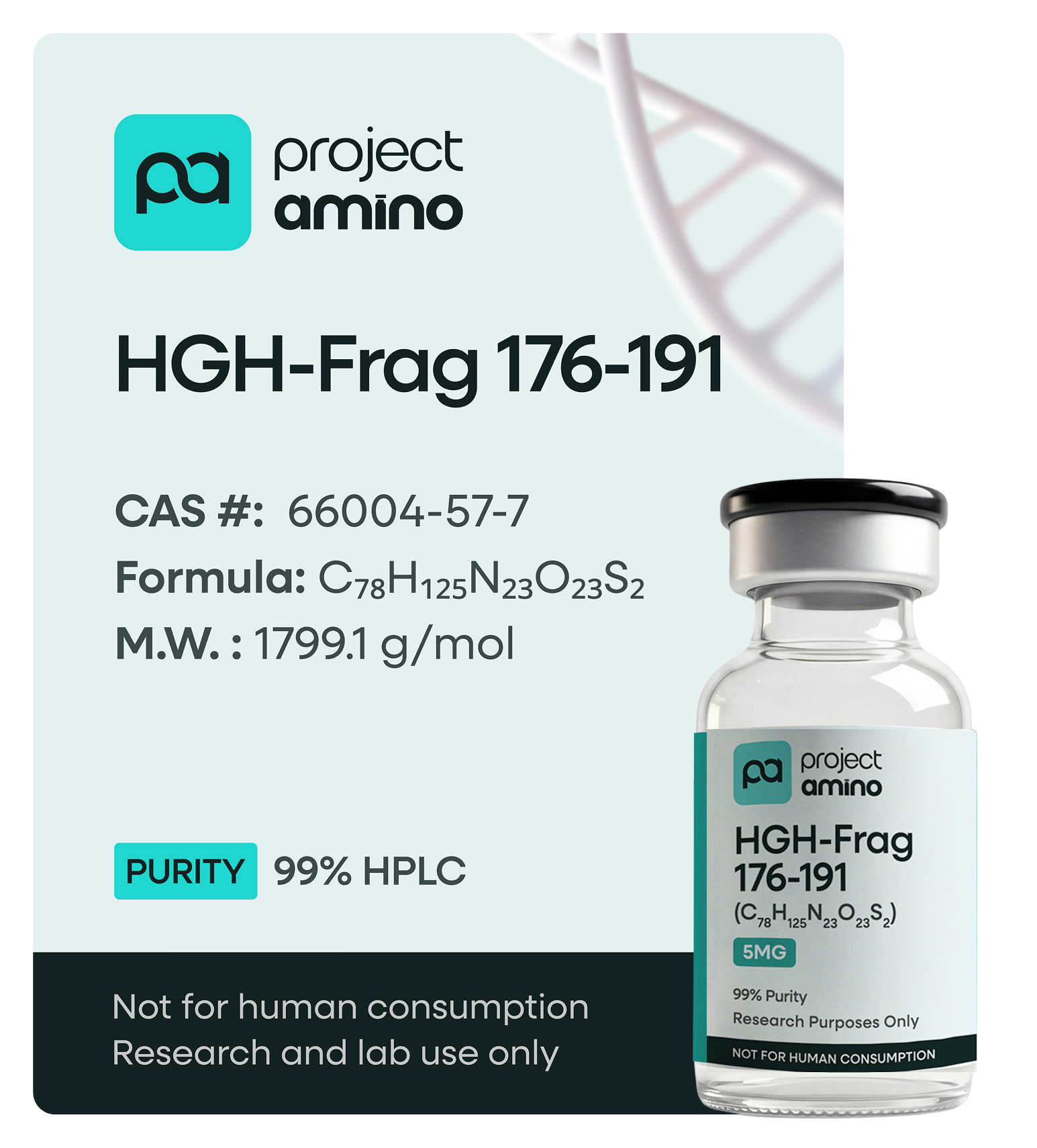
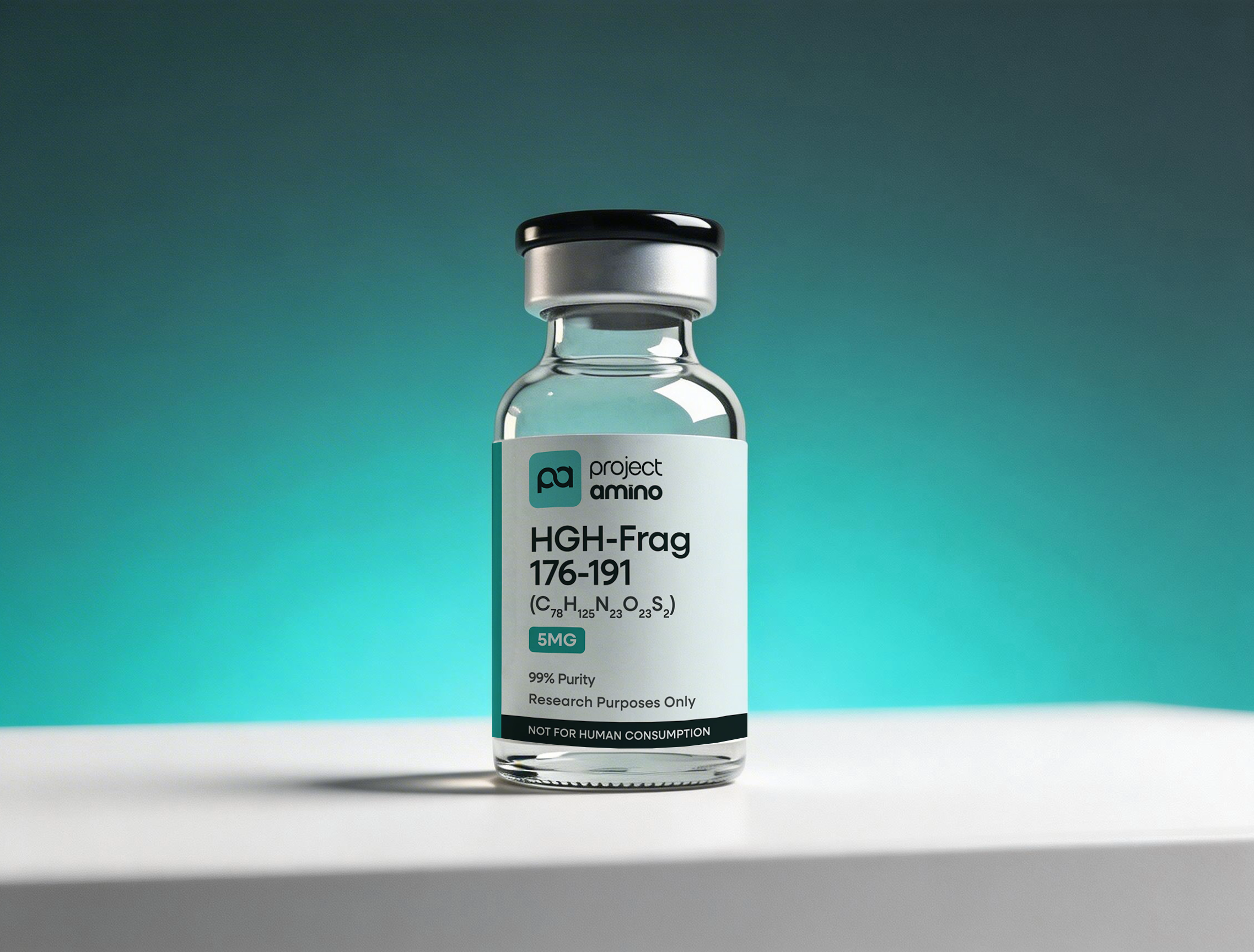
HGH Fragment 176-191 is a synthetic peptide that represents a specific segment of human growth hormone (hGH), featuring a unique tyrosine-to-phenylalanine substitution and an internal disulfide bond. It is primarily utilized in research focused on lipolytic signaling and fatty acid metabolism, particularly in preclinical models. Unlike full hGH, this fragment does not promote growth, making it an ideal tool for studying the metabolic functions of the GH C-terminal domain. This product is for laboratory research use only.
Free Shipping on orders over $200
HGH Fragment 176-191 is a synthetic peptide representing the C-terminal amino acid sequence from position 176 to 191 of human growth hormone (hGH). This fragment includes a tyrosine-to-phenylalanine substitution at the terminal position and contains an internal disulfide bond. It is primarily studied for its involvement in lipolytic signaling, having demonstrated anti-insulin activity and the capacity to influence fatty acid metabolism in preclinical rodent models. Unlike full-length hGH, HGH Fragment 176-191 lacks growth-promoting activity, making it a useful research tool for isolating and studying the metabolic functions of the GH C-terminal domain. Research has also explored its interaction with cancer cell lines and chitosan nanoparticle drug delivery systems. This product is for laboratory research use only and is not intended for human consumption.
These products are for research use only and are not intended for human consumption, therapeutic use, or diagnostic purposes. All compounds described herein have not been approved by the FDA for human use. These products are strictly intended for in vitro laboratory research and analytical purposes when conducted by qualified research professionals in licensed facilities. Users are responsible for ensuring compliance with all applicable laws regarding purchase and use of these materials.
These products are for research use only and are not intended for human consumption, therapeutic use, or diagnostic purposes. All compounds described herein have not been approved by the FDA for human use. These products are strictly intended for in vitro laboratory research and analytical purposes when conducted by qualified research professionals in licensed facilities. Users are responsible for ensuring compliance with all applicable laws regarding purchase and use of these materials.