

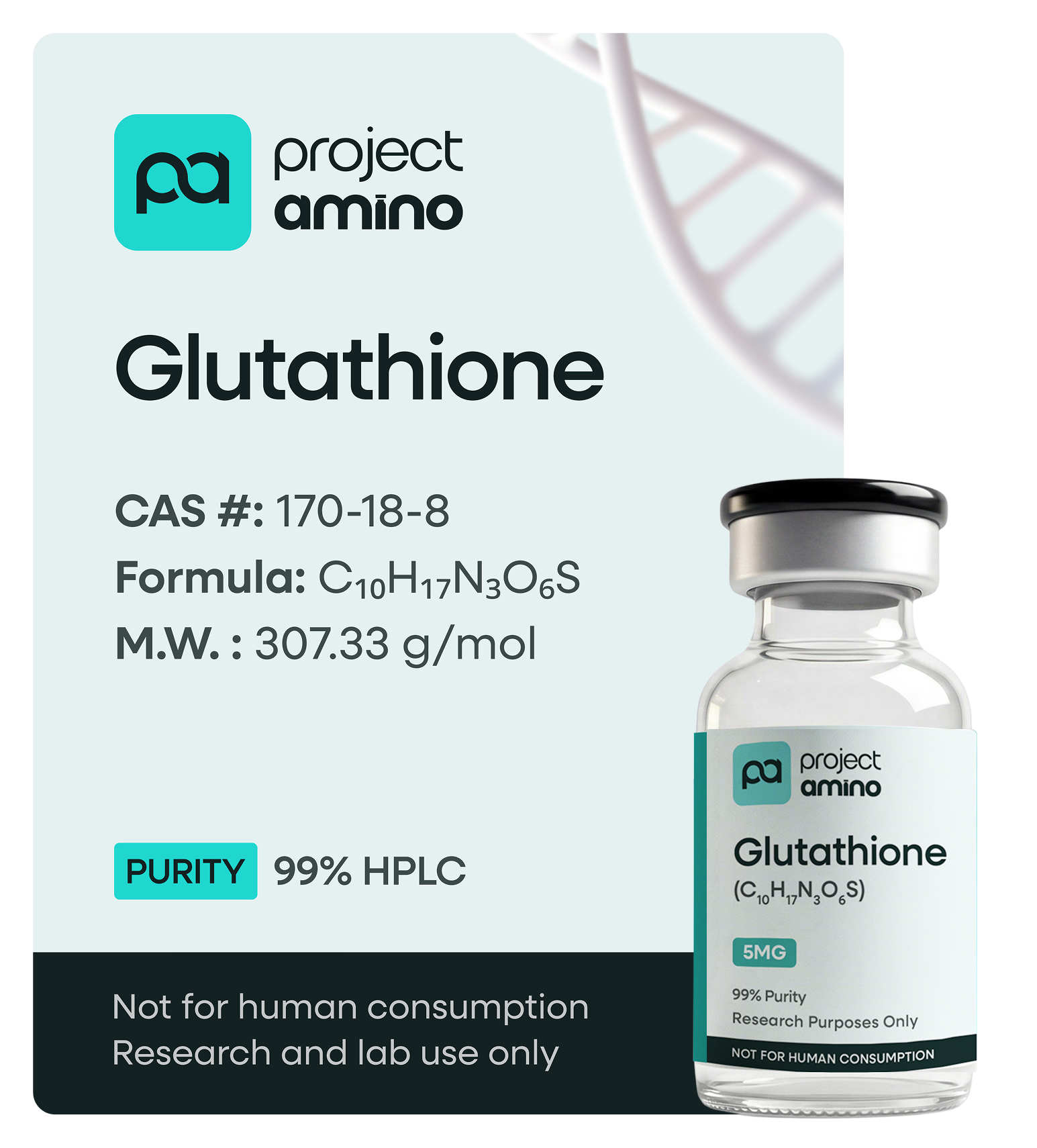
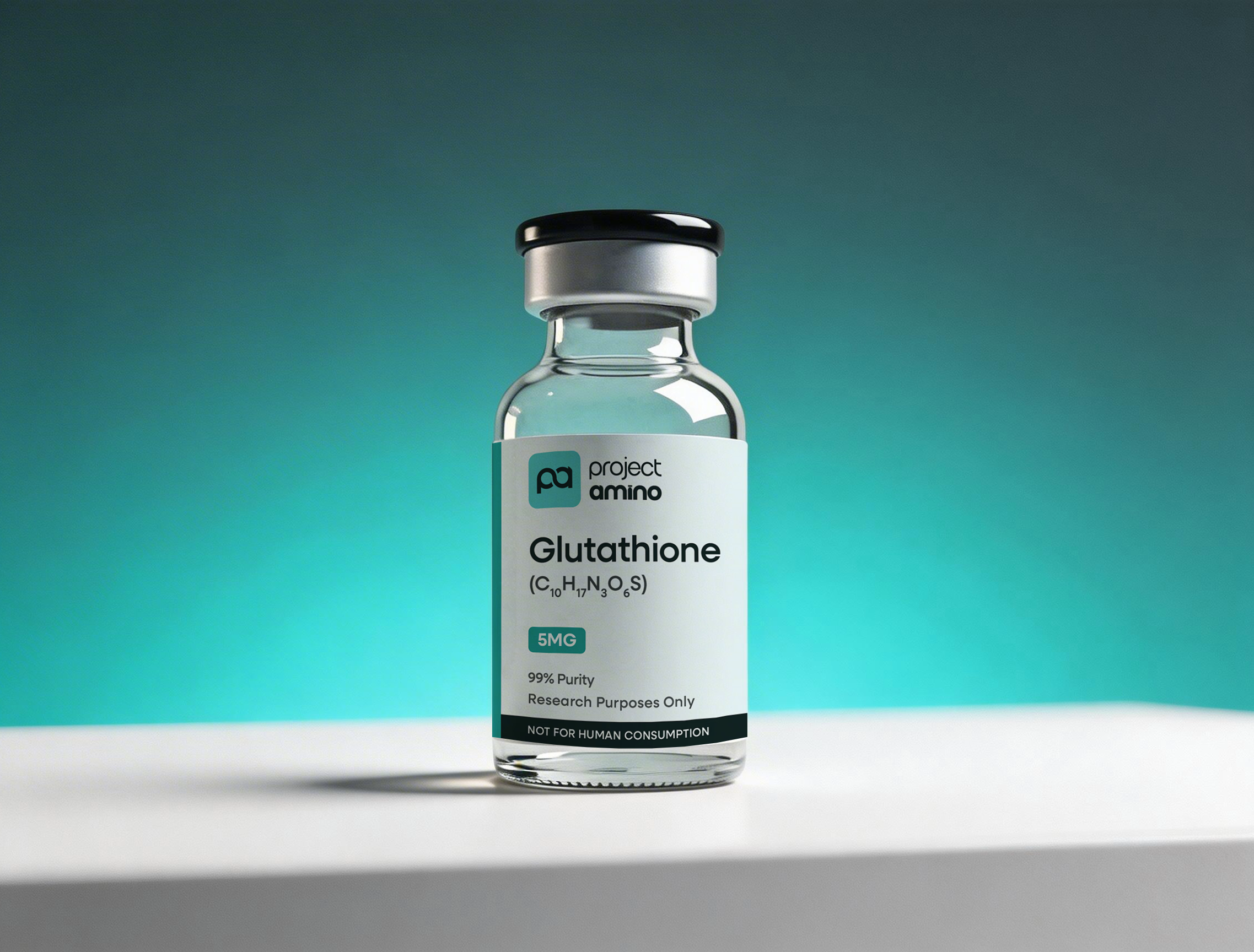
Glutathione (GSH) is a tripeptide made from glutamate, cysteine, and glycine, known for its role as a powerful low-molecular-weight thiol antioxidant in mammalian cells. It aids in protecting against oxidative stress and supports detoxification pathways. GSH acts as a scavenger of reactive oxygen species and a cofactor for key antioxidant enzymes. This research-grade product is provided as a lyophilized powder and is intended for research use only, with no indication for human consumption.
Free Shipping on orders over $200
Glutathione (GSH) is a naturally occurring tripeptide composed of glutamate, cysteine, and glycine. It is the most abundant low-molecular-weight thiol antioxidant in mammalian cells and plays a central role in protecting against oxidative stress, regulating redox homeostasis, and facilitating detoxification pathways. Glutathione functions both as a direct scavenger of reactive oxygen species and as a cofactor for antioxidant enzymes including glutathione peroxidase and glutathione S-transferase. Research has demonstrated its importance in immune cell function, mitochondrial protection, and cellular signaling. GSH levels are frequently studied in the context of aging, metabolic disease, neurodegeneration, and inflammatory conditions. This product is supplied as a lyophilized powder for research use only and is not intended for human consumption.
These products are for research use only and are not intended for human consumption, therapeutic use, or diagnostic purposes. All compounds described herein have not been approved by the FDA for human use. These products are strictly intended for in vitro laboratory research and analytical purposes when conducted by qualified research professionals in licensed facilities. Users are responsible for ensuring compliance with all applicable laws regarding purchase and use of these materials.
These products are for research use only and are not intended for human consumption, therapeutic use, or diagnostic purposes. All compounds described herein have not been approved by the FDA for human use. These products are strictly intended for in vitro laboratory research and analytical purposes when conducted by qualified research professionals in licensed facilities. Users are responsible for ensuring compliance with all applicable laws regarding purchase and use of these materials.