

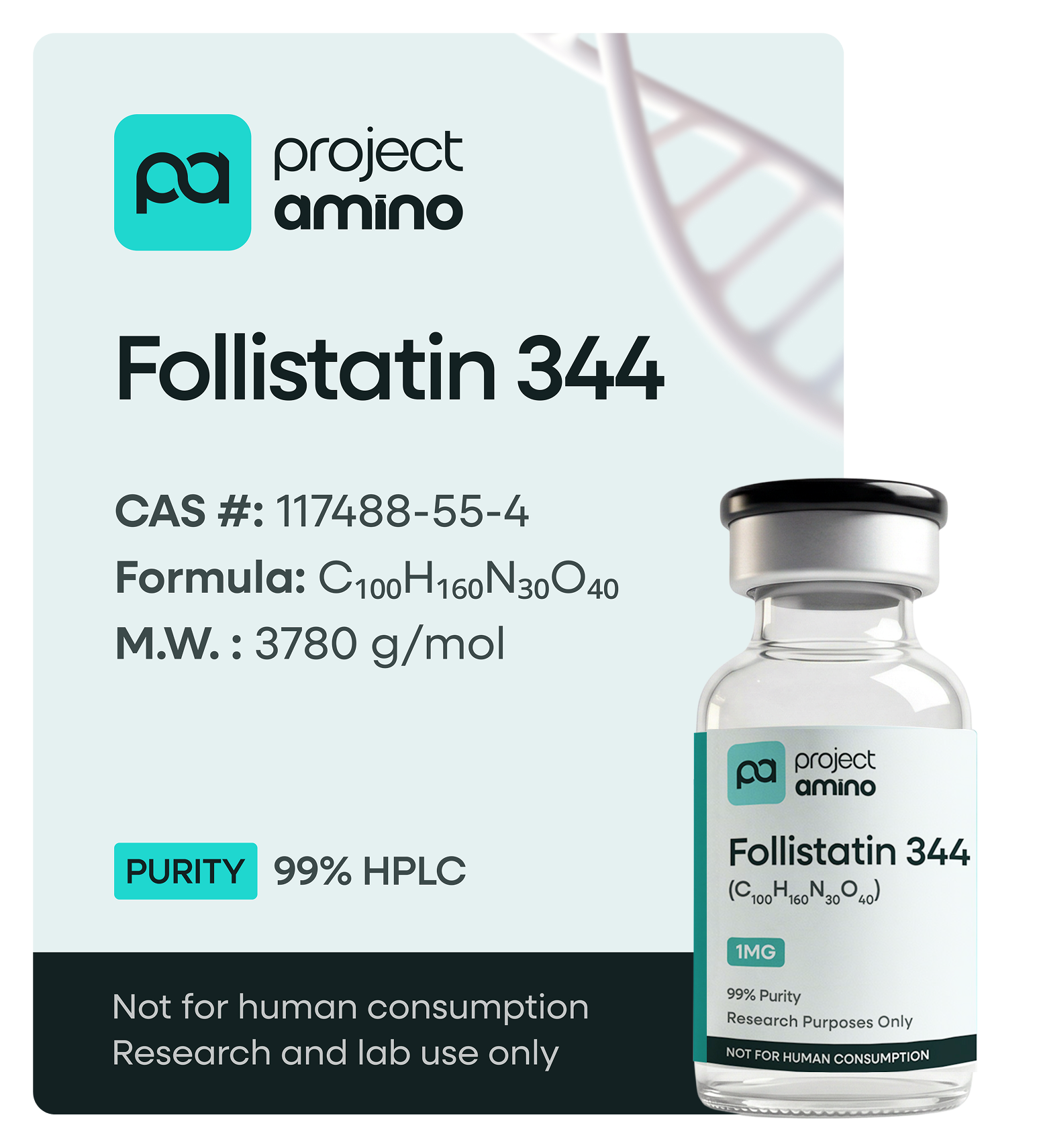
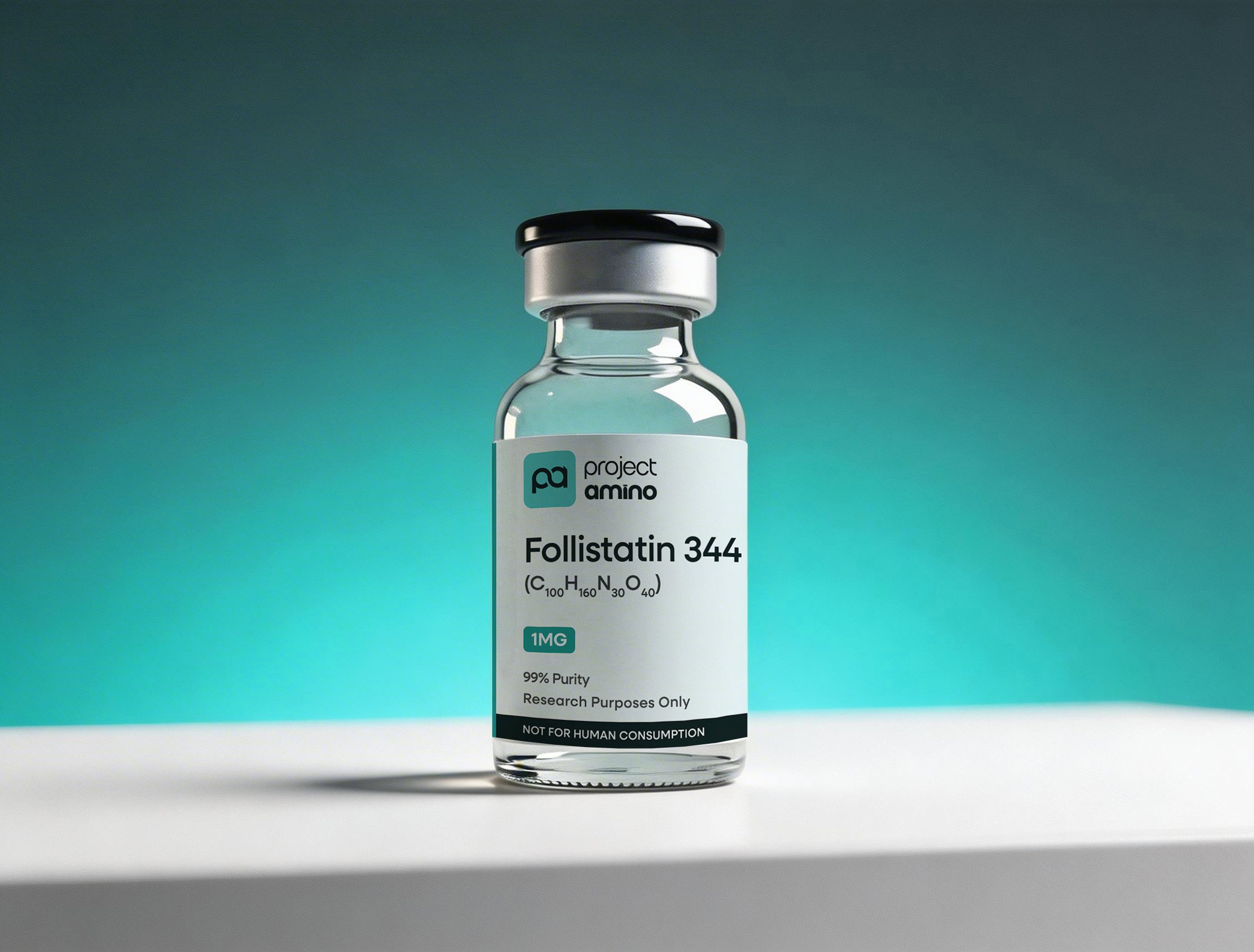
Follistatin 344 (FST-344) is a full-length glycoprotein isoform that serves as a high-affinity binding protein for select members of the TGF-beta superfamily. It is primarily studied for its ability to bind and neutralize activins and myostatin, which are growth factors involved in cellular growth and differentiation. FST-344 plays a role in modulating SMAD-dependent signaling and the Akt/mTOR protein synthesis pathway. This product is intended solely for in vitro and in vivo laboratory research use.
Free Shipping on orders over $200
Follistatin 344 (FST-344) is a full-length, naturally occurring glycoprotein isoform that functions as a high-affinity extracellular binding protein for select members of the transforming growth factor-beta (TGF-beta) superfamily. Originally identified for its capacity to suppress follicle-stimulating hormone (FSH) secretion, it is most widely studied for its ability to bind and neutralize activins and myostatin, two secreted growth factors involved in the regulation of cellular growth, differentiation, and tissue homeostasis. By sequestering these ligands extracellularly, Follistatin 344 modulates downstream SMAD-dependent signaling cascades and the Akt/mTOR protein synthesis pathway. Research applications span skeletal muscle biology, reproductive endocrinology, neuromuscular disease modeling, and metabolic physiology. This product is intended exclusively for in vitro and in vivo laboratory research use only and is not intended for human consumption.
These products are for research use only and are not intended for human consumption, therapeutic use, or diagnostic purposes. All compounds described herein have not been approved by the FDA for human use. These products are strictly intended for in vitro laboratory research and analytical purposes when conducted by qualified research professionals in licensed facilities. Users are responsible for ensuring compliance with all applicable laws regarding purchase and use of these materials.
These products are for research use only and are not intended for human consumption, therapeutic use, or diagnostic purposes. All compounds described herein have not been approved by the FDA for human use. These products are strictly intended for in vitro laboratory research and analytical purposes when conducted by qualified research professionals in licensed facilities. Users are responsible for ensuring compliance with all applicable laws regarding purchase and use of these materials.