

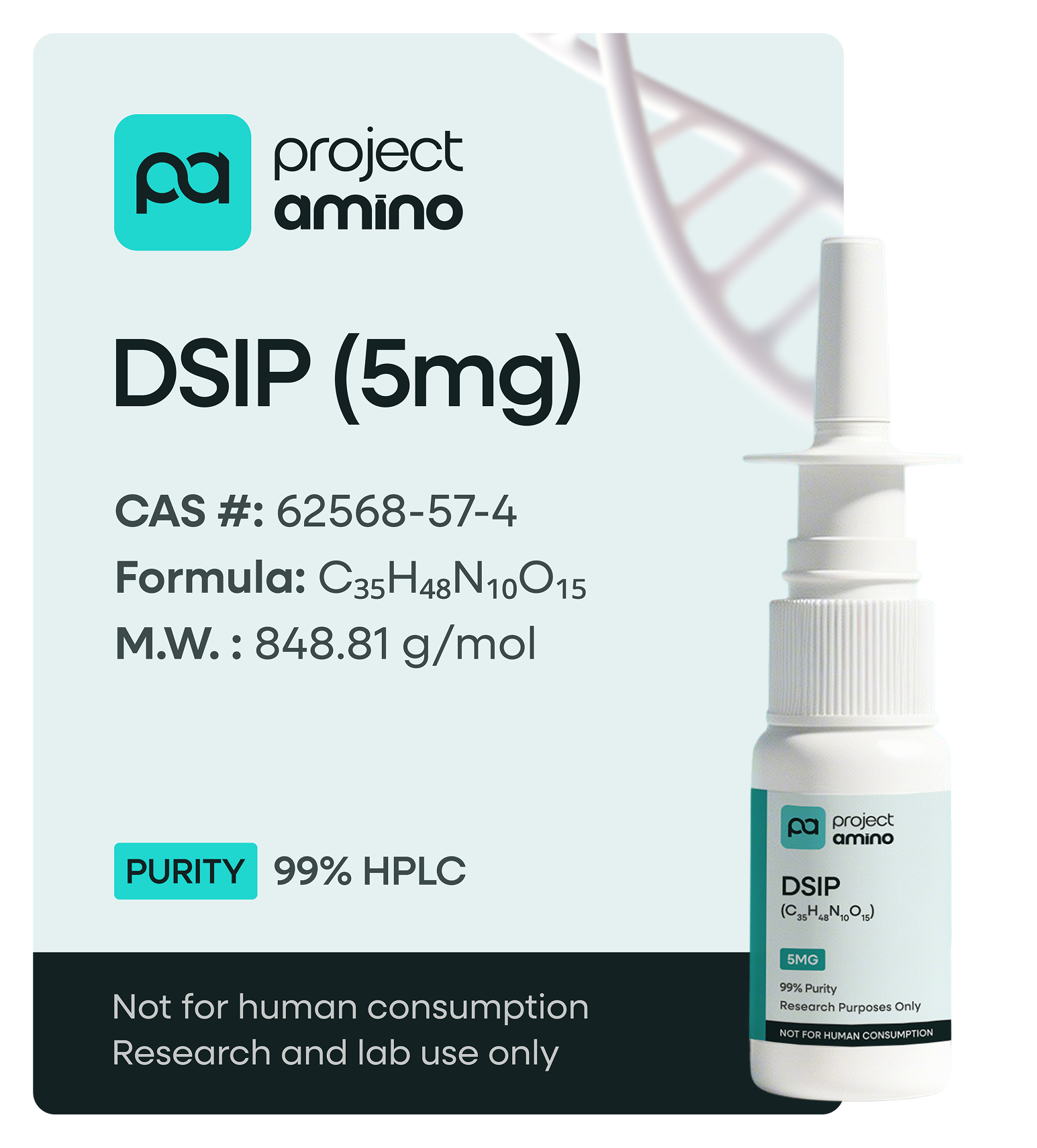
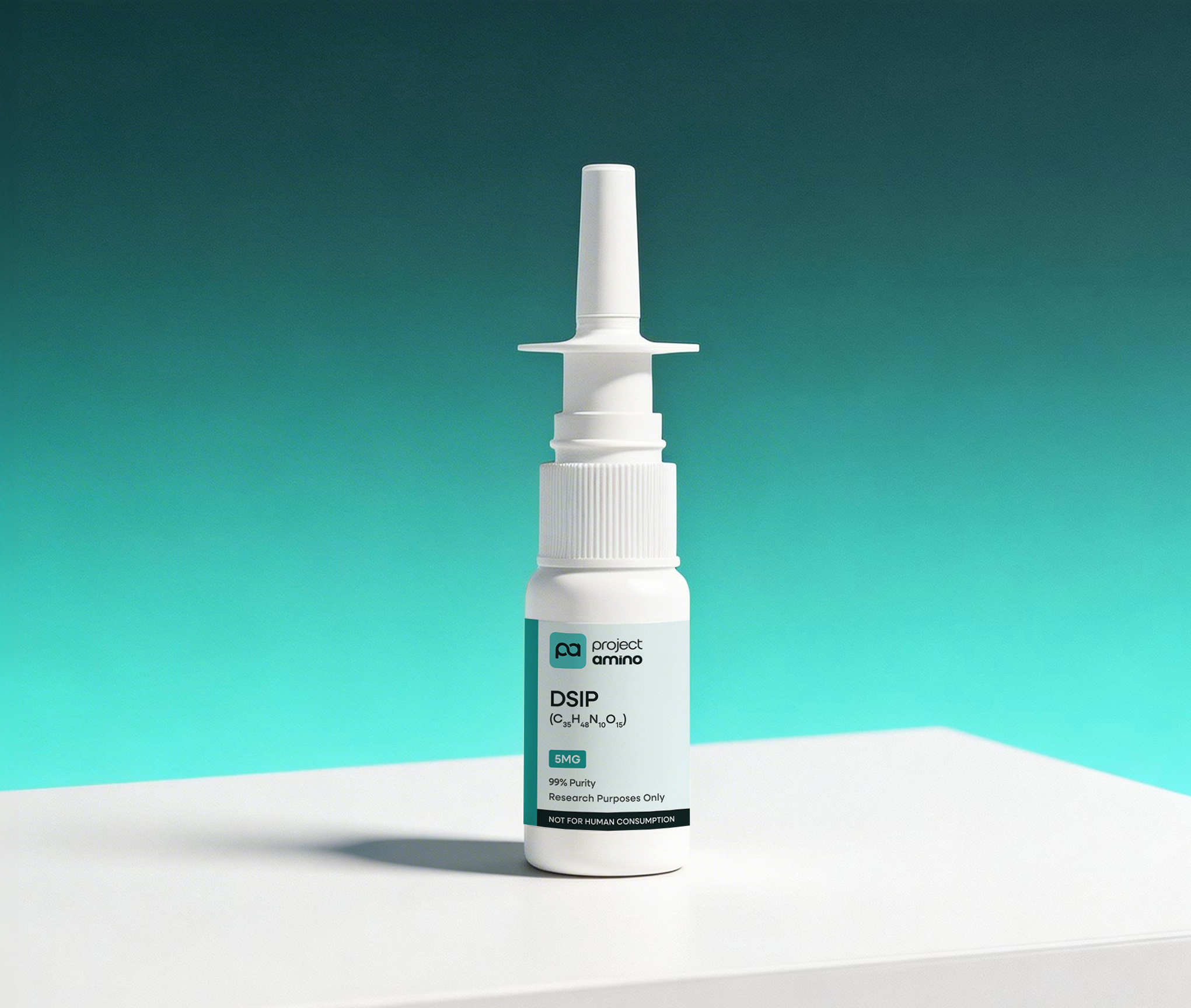
Delta Sleep-Inducing Peptide (DSIP) is a synthetic nonapeptide identified from rabbit cerebral venous blood during slow-wave sleep. Composed of a nine amino acid sequence (Trp-Ala-Gly-Gly-Asp-Ala-Ser-Gly-Glu), DSIP can cross the blood-brain barrier, making it an important research tool for studying neuromodulatory mechanisms. Found in plasma and neurons, DSIP’s concentrations are linked to circadian rhythms and sleep initiation, and it interacts with neurotransmitter systems, hormonal pathways, and stress responses.
Free Shipping on orders over $200
Delta Sleep-Inducing Peptide (DSIP) is a synthetic nonapeptide originally isolated from the cerebral venous blood of rabbits during slow-wave sleep. Comprising a nine amino acid sequence (Trp-Ala-Gly-Gly-Asp-Ala-Ser-Gly-Glu), DSIP demonstrates the ability to cross the blood-brain barrier, making it a valuable research compound for investigating neuromodulatory mechanisms. The peptide is found in plasma, peripheral organs, and neurons, with research indicating its concentrations correlate with human circadian rhythm patterns and sleep initiation. DSIP exhibits biological activities beyond sleep modulation, including interaction with neurotransmitter release systems, hormonal regulation pathways, and stress response mechanisms.
These products are for research use only and are not intended for human consumption, therapeutic use, or diagnostic purposes. All compounds described herein have not been approved by the FDA for human use. These products are strictly intended for in vitro laboratory research and analytical purposes when conducted by qualified research professionals in licensed facilities. Users are responsible for ensuring compliance with all applicable laws regarding purchase and use of these materials.
These products are for research use only and are not intended for human consumption, therapeutic use, or diagnostic purposes. All compounds described herein have not been approved by the FDA for human use. These products are strictly intended for in vitro laboratory research and analytical purposes when conducted by qualified research professionals in licensed facilities. Users are responsible for ensuring compliance with all applicable laws regarding purchase and use of these materials.