

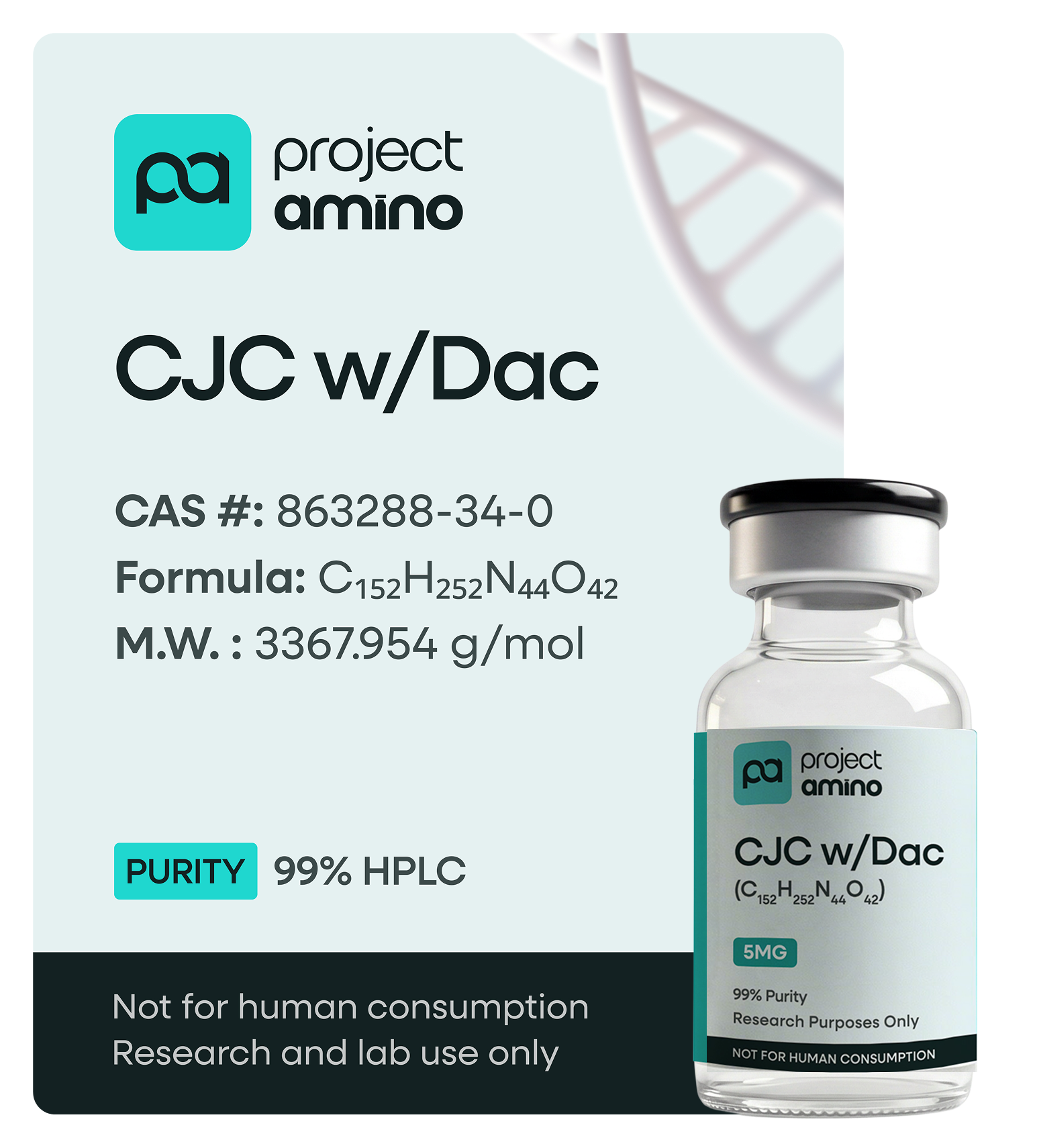
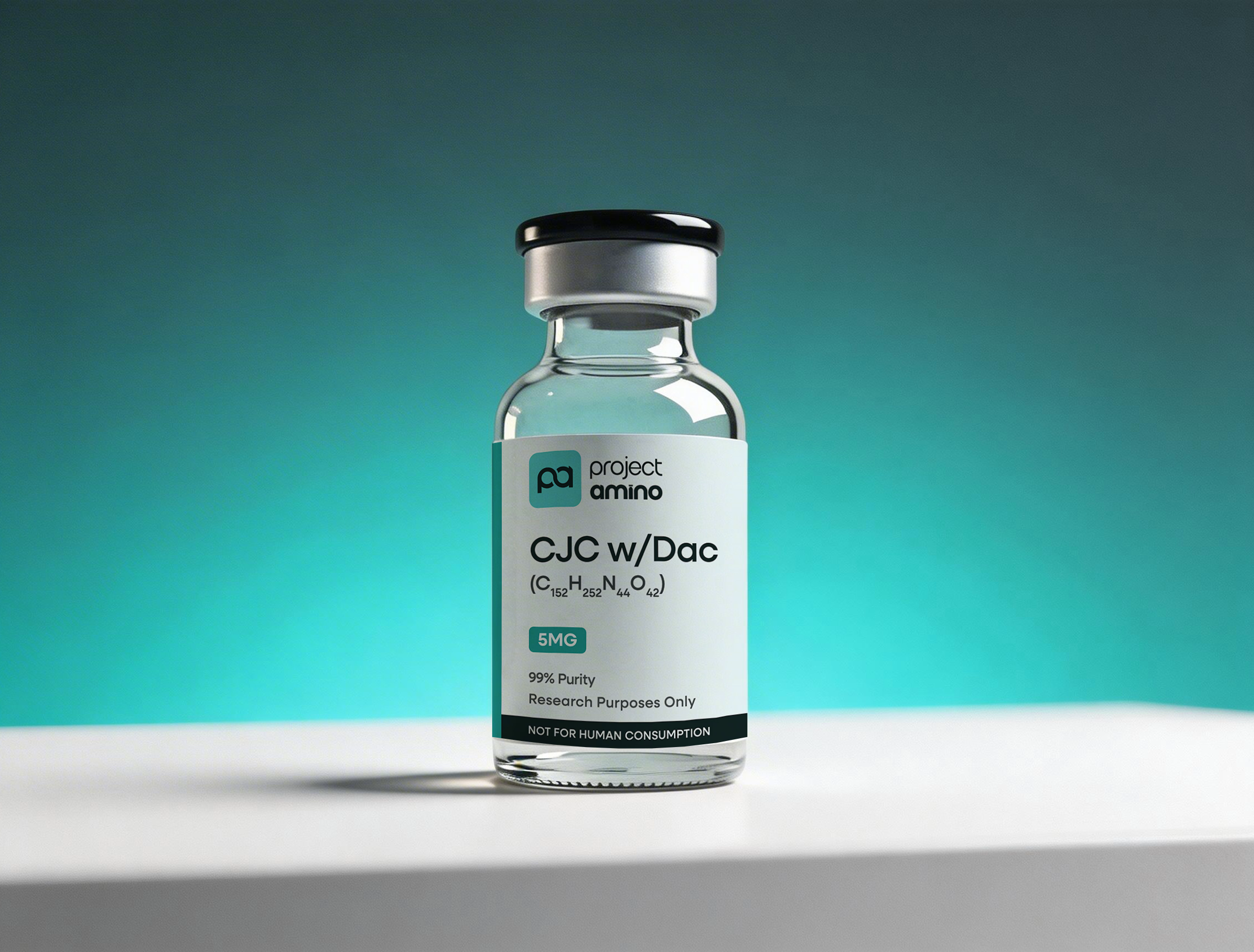
CJC-1295 with DAC is a synthetic peptide designed to enhance the stability and circulation time of growth hormone-releasing hormone (GHRH). Comprising 30 amino acids, this peptide features a unique linker that allows for covalent bonding to albumin, creating a complex that protects it from degradation. Its extended activity makes CJC-1295 with DAC an essential tool for research on GHRH receptor activation and the modulation of the GH/IGF-1 axis, providing insights into peptide dynamics and their mechanisms.
Free Shipping on orders over $200
CJC-1295 with DAC is a synthetic analog of growth hormone-releasing hormone (GHRH) engineered to have an extended half-life and enhanced bioavailability compared to endogenous GHRH. The 30-amino acid peptide incorporates the initial 29 residues of GHRH and a Glu-Ser-Ser linker to a reactive Cys residue, allowing for covalent bonding to albumin through a maleimide group. This conjugation creates a drug affinity complex that protects the peptide from degradation and prolongs its circulation time, resulting in sustained GH release and elevated IGF-1 levels. CJC-1295 with DAC has been studied for its potential to treat GH deficiency, reverse age-related declines in GH production, and improve body composition. The peptide’s extended activity provides a valuable tool for investigating the long-term effects of GHRH receptor activation and GH/IGF-1 axis modulation.
These products are for research use only and are not intended for human consumption, therapeutic use, or diagnostic purposes. All compounds described herein have not been approved by the FDA for human use. These products are strictly intended for in vitro laboratory research and analytical purposes when conducted by qualified research professionals in licensed facilities. Users are responsible for ensuring compliance with all applicable laws regarding purchase and use of these materials.
These products are for research use only and are not intended for human consumption, therapeutic use, or diagnostic purposes. All compounds described herein have not been approved by the FDA for human use. These products are strictly intended for in vitro laboratory research and analytical purposes when conducted by qualified research professionals in licensed facilities. Users are responsible for ensuring compliance with all applicable laws regarding purchase and use of these materials.