

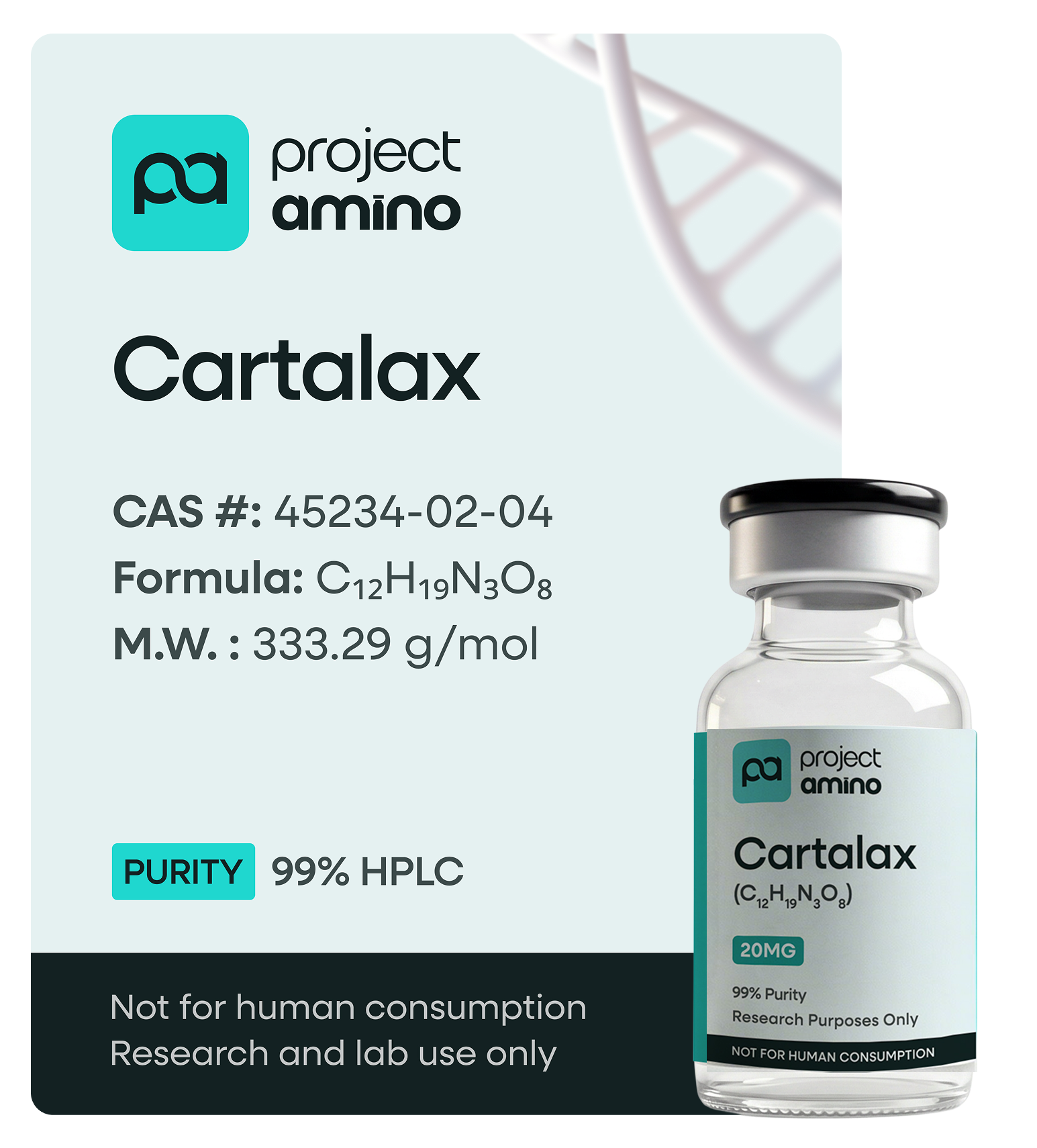
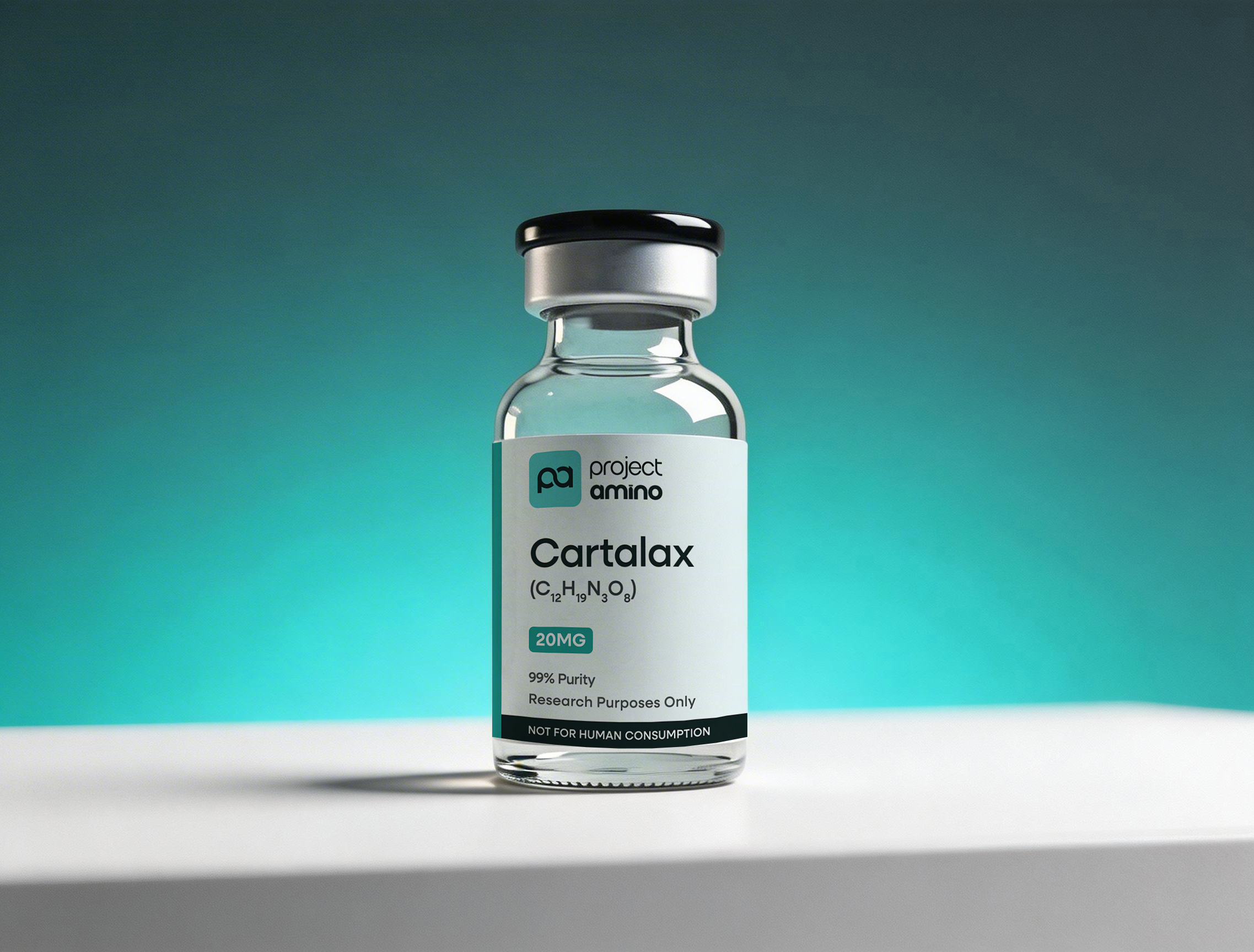
Cartalax, also known as CTGF (Connective Tissue Growth Factor), is a synthetic peptide that originates from the C-terminal region of human connective tissue growth factor. This 38-kDa cysteine-rich protein is instrumental in extracellular matrix synthesis, cell adhesion, and tissue repair. The sequence targets the heparin-binding domain of CTGF, making it a valuable resource for research into fibroblast proliferation, collagen deposition, and angiogenesis, contributing to studies on connective tissue mechanisms and regenerative processes.
Free Shipping on orders over $200
Cartalax (also known as CTGF or Connective Tissue Growth Factor) is a synthetic peptide derived from the C-terminal region of human connective tissue growth factor, a 38-kDa cysteine-rich protein involved in extracellular matrix synthesis, cell adhesion, and tissue repair. The peptide sequence corresponds to the heparin-binding domain of CTGF, which has been shown to stimulate fibroblast proliferation, collagen deposition, and angiogenesis in vitro and in animal studies. Cartalax has been researched for its potential to promote wound healing, reduce scar formation, and improve skin texture and elasticity. The peptide’s ability to stimulate extracellular matrix remodeling and cell migration makes it a promising tool for investigating connective tissue repair mechanisms and regenerative medicine applications.
These products are for research use only and are not intended for human consumption, therapeutic use, or diagnostic purposes. All compounds described herein have not been approved by the FDA for human use. These products are strictly intended for in vitro laboratory research and analytical purposes when conducted by qualified research professionals in licensed facilities. Users are responsible for ensuring compliance with all applicable laws regarding purchase and use of these materials.
These products are for research use only and are not intended for human consumption, therapeutic use, or diagnostic purposes. All compounds described herein have not been approved by the FDA for human use. These products are strictly intended for in vitro laboratory research and analytical purposes when conducted by qualified research professionals in licensed facilities. Users are responsible for ensuring compliance with all applicable laws regarding purchase and use of these materials.