

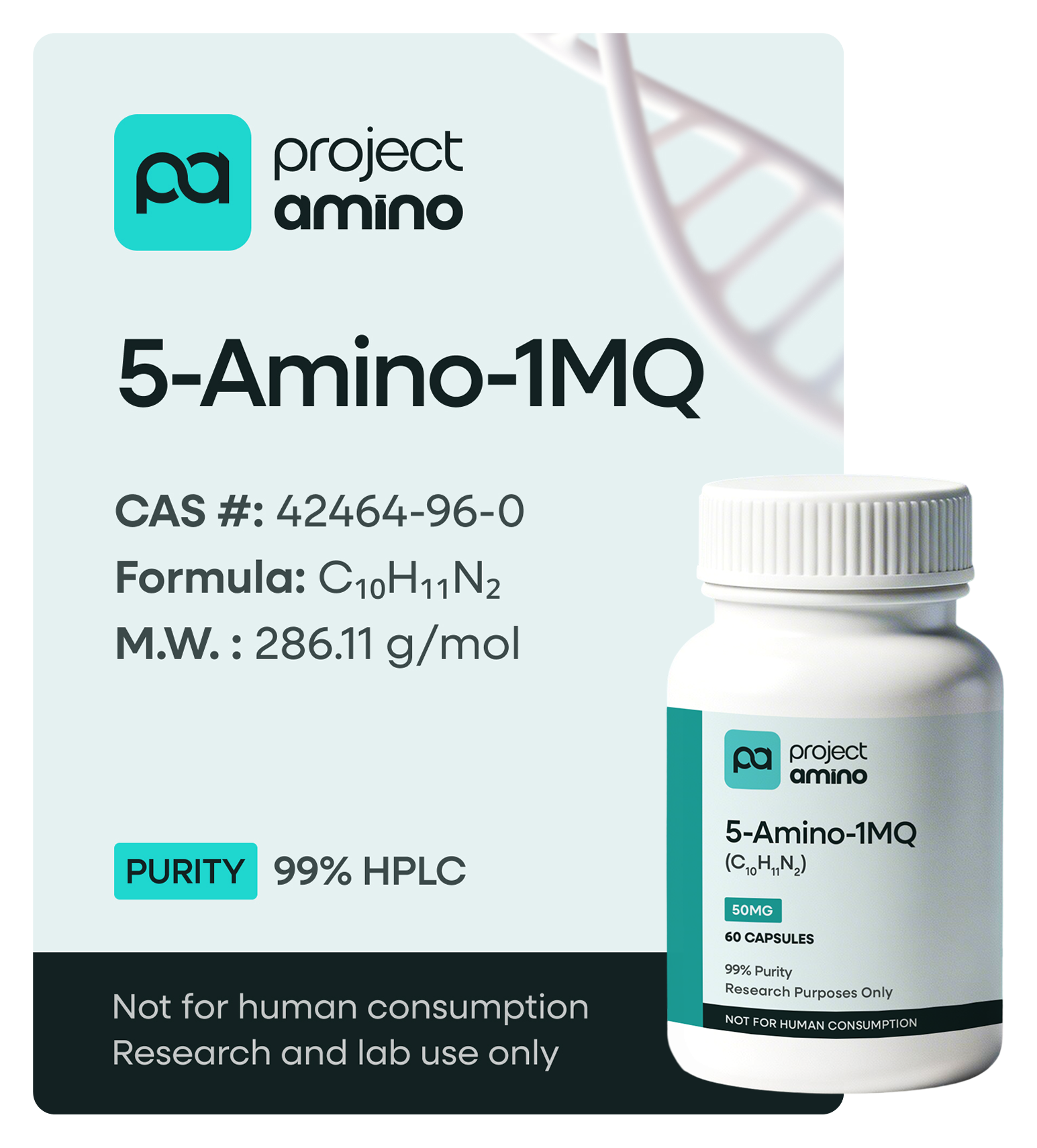
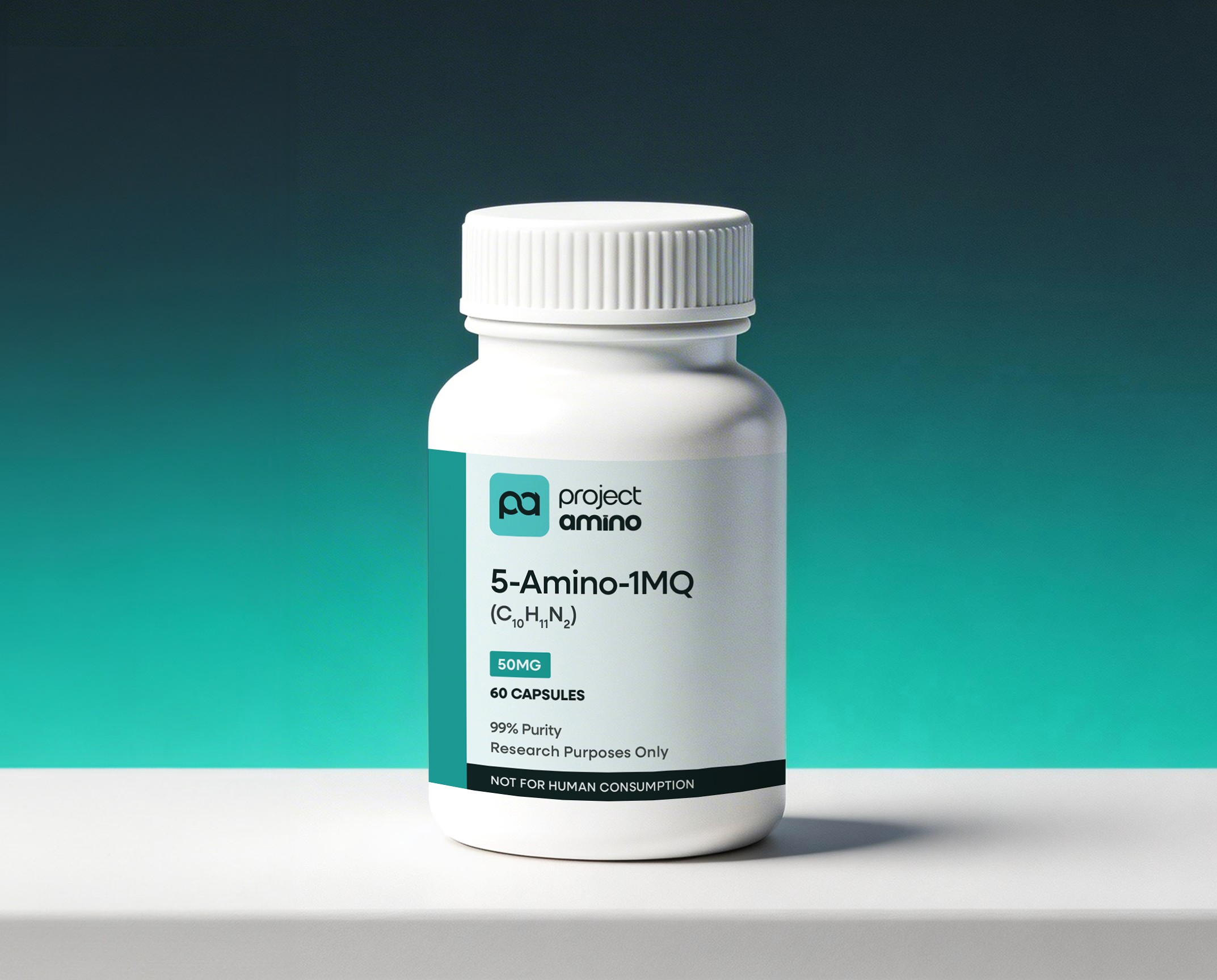
5-Amino-1MQ (5-amino-1-methylquinolinium) is a synthetic small-molecule NNMT inhibitor designed for research into metabolic regulation and cellular energy homeostasis. This compound effectively blocks NNMT enzyme activity, facilitating the recycling of nicotinamide into NAD+ via the salvage pathway. Developed by researchers at the University of Texas Medical Branch, 5-Amino-1MQ features excellent membrane permeability and oral bioavailability. It is currently being explored in preclinical studies for its role in metabolic signaling pathways and energy expenditure research.
Free Shipping on orders over $200
5-Amino-1MQ (5-amino-1-methylquinolinium) is a synthetic small-molecule NNMT (nicotinamide N-methyltransferase) inhibitor developed for research into metabolic regulation and cellular energy homeostasis. This compound selectively blocks NNMT enzyme activity, preventing the breakdown of nicotinamide and allowing its recycling into NAD+ through the salvage pathway. Originally developed by researchers at the University of Texas Medical Branch, 5-Amino-1MQ exhibits excellent membrane permeability and oral bioavailability due to its non-peptide structure. The compound has been investigated in preclinical models for its effects on metabolic signaling pathways, adipocyte function, and cellular redox balance. Current research examines its potential applications in metabolic dysfunction research and energy expenditure studies.
These products are for research use only and are not intended for human consumption, therapeutic use, or diagnostic purposes. All compounds described herein have not been approved by the FDA for human use. These products are strictly intended for in vitro laboratory research and analytical purposes when conducted by qualified research professionals in licensed facilities. Users are responsible for ensuring compliance with all applicable laws regarding purchase and use of these materials.
These products are for research use only and are not intended for human consumption, therapeutic use, or diagnostic purposes. All compounds described herein have not been approved by the FDA for human use. These products are strictly intended for in vitro laboratory research and analytical purposes when conducted by qualified research professionals in licensed facilities. Users are responsible for ensuring compliance with all applicable laws regarding purchase and use of these materials.