

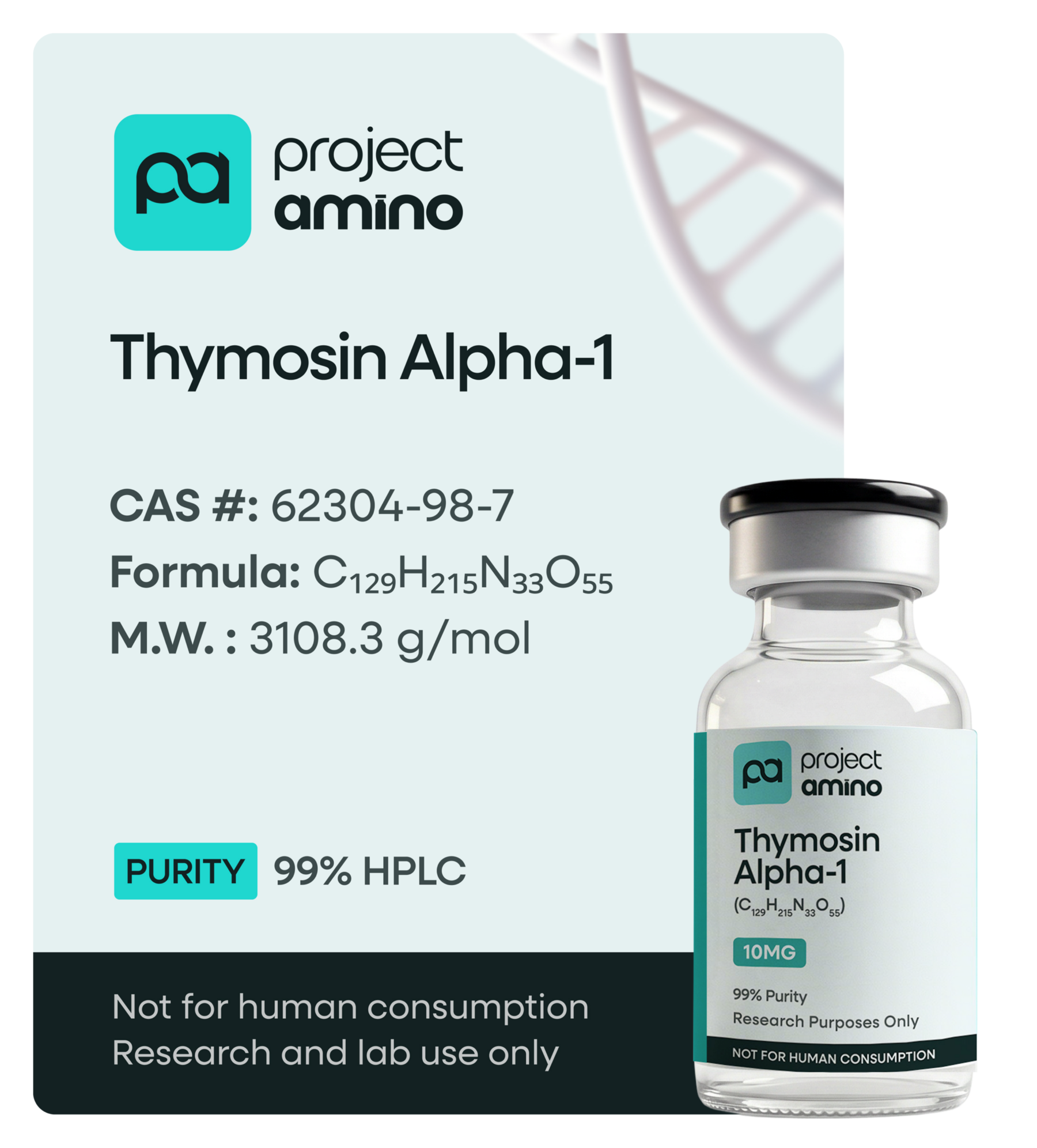
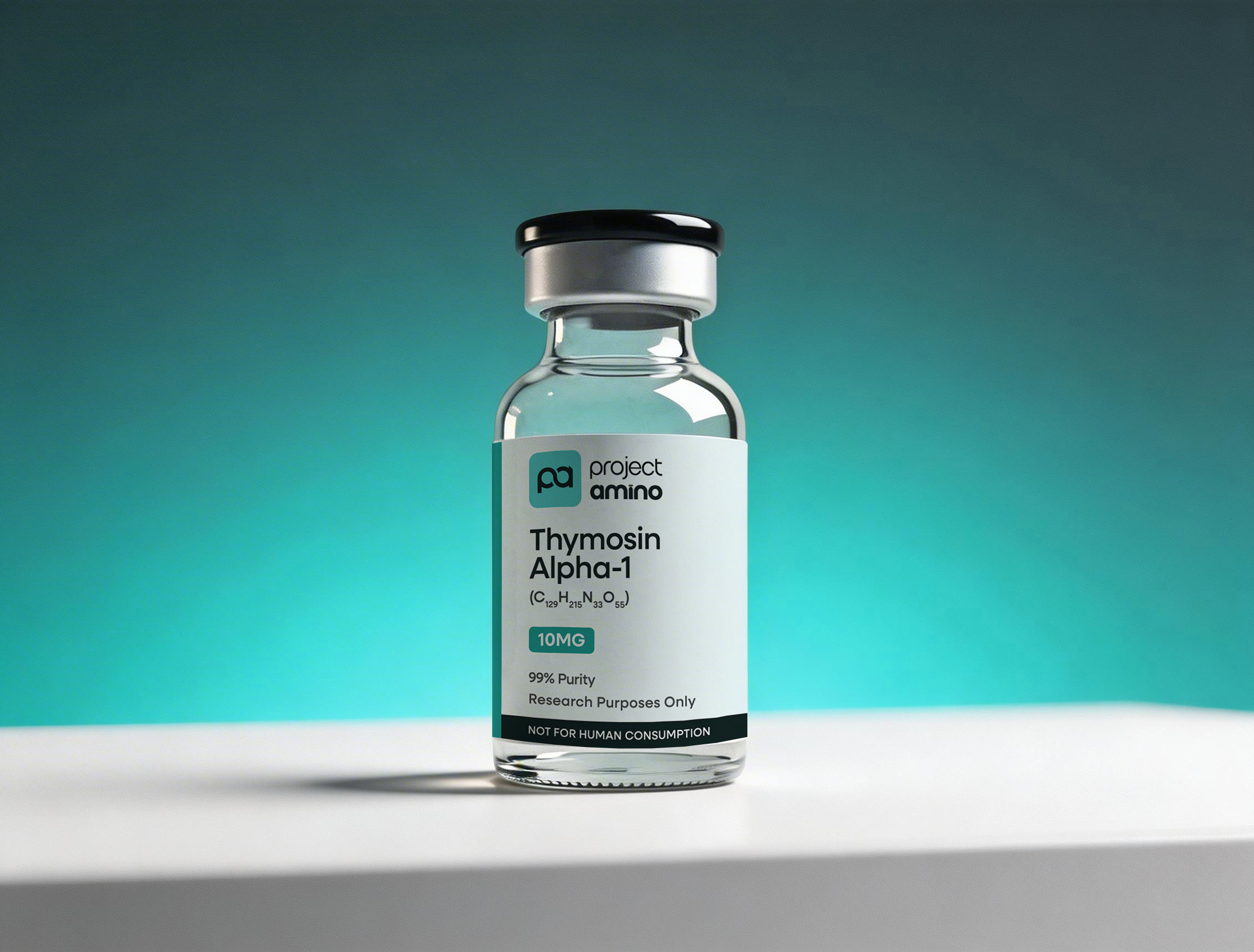
Thymosin Alpha-1 (Ta1, Thymalfasin) is a 28-amino acid peptide derived from bovine thymus tissue. This naturally occurring peptide serves as a crucial regulator of T-cell development and activation. It functions by interacting with toll-like receptors (TLRs) and activating the MyD88/NF-kB signaling pathway, facilitating T-helper cell differentiation and dendritic cell maturation. Primarily utilized in research settings, Ta1 aids in the exploration of T-cell immunology and innate immune system signaling. For research use only. Not for human consumption.
Free Shipping on orders over $200
Thymosin Alpha-1 (Ta1, Thymalfasin) is a 28-amino acid peptide originally isolated from thymosin fraction 5 of bovine thymus gland tissue in 1972. It is a naturally occurring immunomodulatory peptide that acts as a key regulator of T-cell development and activation. Ta1 exerts its primary effects by interacting with toll-like receptors (TLRs) and activating the MyD88/NF-kB signaling cascade, promoting T-helper cell differentiation, dendritic cell maturation, and natural killer cell activity. It is approved for clinical use in over 35 countries for chronic hepatitis B and C treatment and has been studied in the context of sepsis, cystic fibrosis, cancer, and viral infections. In research settings, it is used to probe T-cell immunology and innate immune system signaling. For research use only. Not for human consumption.
These products are for research use only and are not intended for human consumption, therapeutic use, or diagnostic purposes. All compounds described herein have not been approved by the FDA for human use. These products are strictly intended for in vitro laboratory research and analytical purposes when conducted by qualified research professionals in licensed facilities. Users are responsible for ensuring compliance with all applicable laws regarding purchase and use of these materials.
These products are for research use only and are not intended for human consumption, therapeutic use, or diagnostic purposes. All compounds described herein have not been approved by the FDA for human use. These products are strictly intended for in vitro laboratory research and analytical purposes when conducted by qualified research professionals in licensed facilities. Users are responsible for ensuring compliance with all applicable laws regarding purchase and use of these materials.