

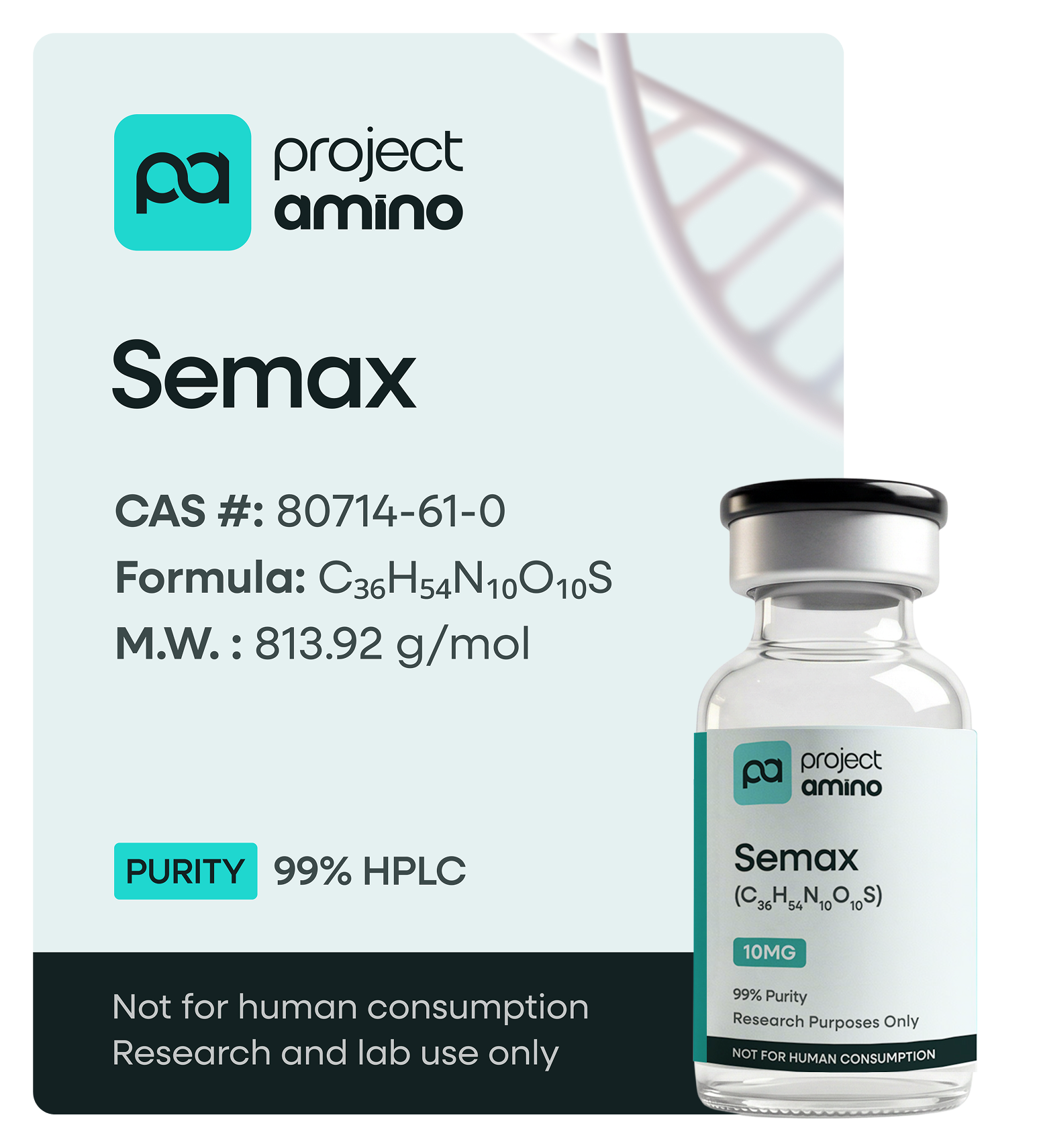
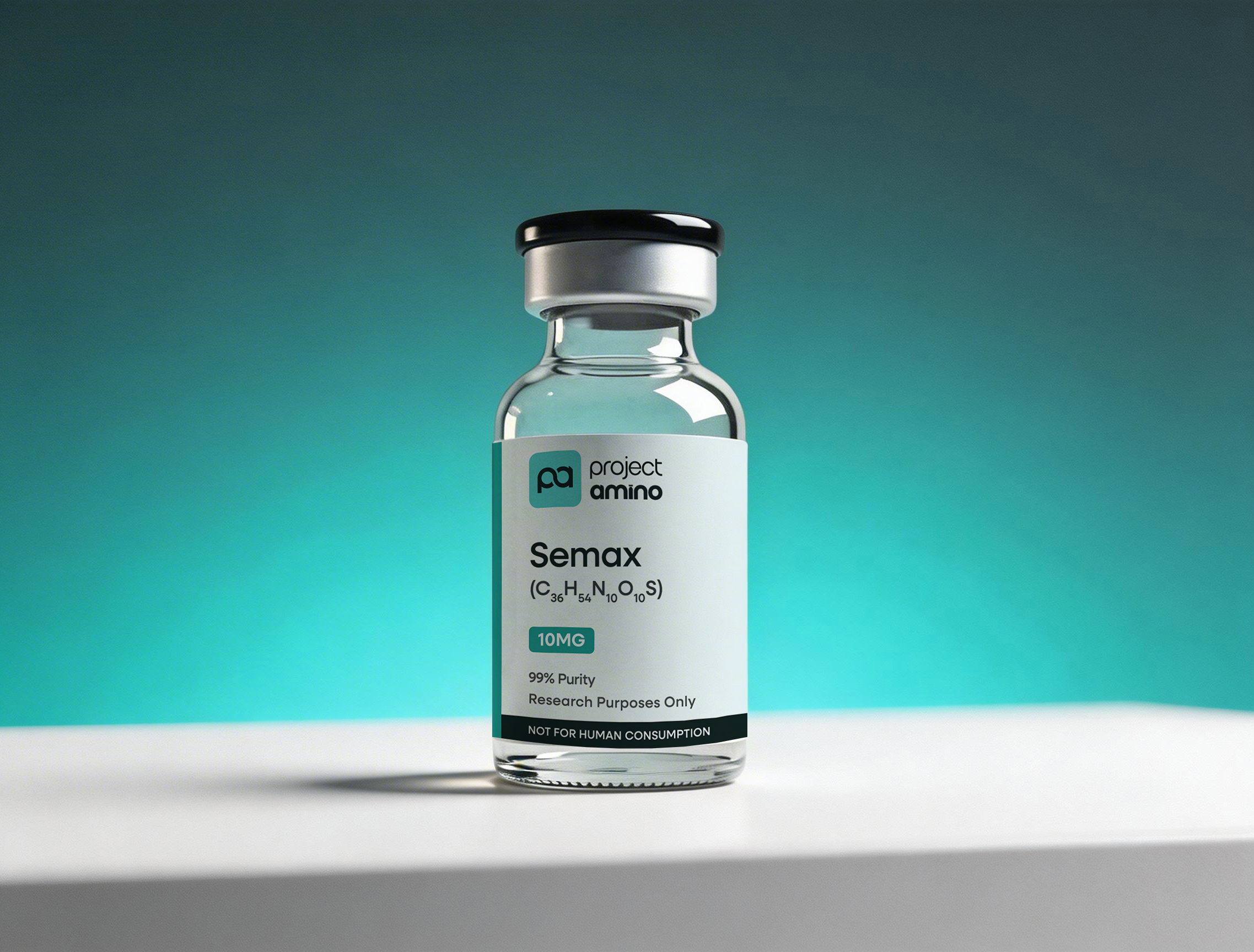
Semax (Met-Glu-His-Phe-Pro-Gly-Pro) is a synthetic heptapeptide derived from the adrenocorticotropic hormone fragment ACTH (4-10). Developed at the Institute of Molecular Genetics of the Russian Academy of Sciences, it features a C-terminal Pro-Gly-Pro extension that stabilizes the molecule, enhancing its biological activity. Semax is permeable to the blood-brain barrier and has been the subject of extensive research for its properties in various settings. This product is intended for research use only and not for human consumption.
Free Shipping on orders over $200
Semax (Met-Glu-His-Phe-Pro-Gly-Pro) is a synthetic heptapeptide analogue of adrenocorticotropic hormone fragment ACTH (4-10), developed at the Institute of Molecular Genetics of the Russian Academy of Sciences. Unlike ACTH (4-10), Semax incorporates a C-terminal Pro-Gly-Pro extension that stabilizes the molecule and prolongs its biological activity. It is blood-brain barrier permeable and has been studied extensively for its nootropic, neuroprotective, and neurotrophic properties in preclinical and clinical research settings. Its mechanisms include upregulation of BDNF and NGF expression, modulation of dopaminergic and serotonergic neurotransmitter systems, and suppression of oxidative stress markers following ischemic challenge. It is approved for use in Russia for ischemic stroke and certain cognitive disorders. For research use only. Not for human consumption.
These products are for research use only and are not intended for human consumption, therapeutic use, or diagnostic purposes. All compounds described herein have not been approved by the FDA for human use. These products are strictly intended for in vitro laboratory research and analytical purposes when conducted by qualified research professionals in licensed facilities. Users are responsible for ensuring compliance with all applicable laws regarding purchase and use of these materials.
These products are for research use only and are not intended for human consumption, therapeutic use, or diagnostic purposes. All compounds described herein have not been approved by the FDA for human use. These products are strictly intended for in vitro laboratory research and analytical purposes when conducted by qualified research professionals in licensed facilities. Users are responsible for ensuring compliance with all applicable laws regarding purchase and use of these materials.