

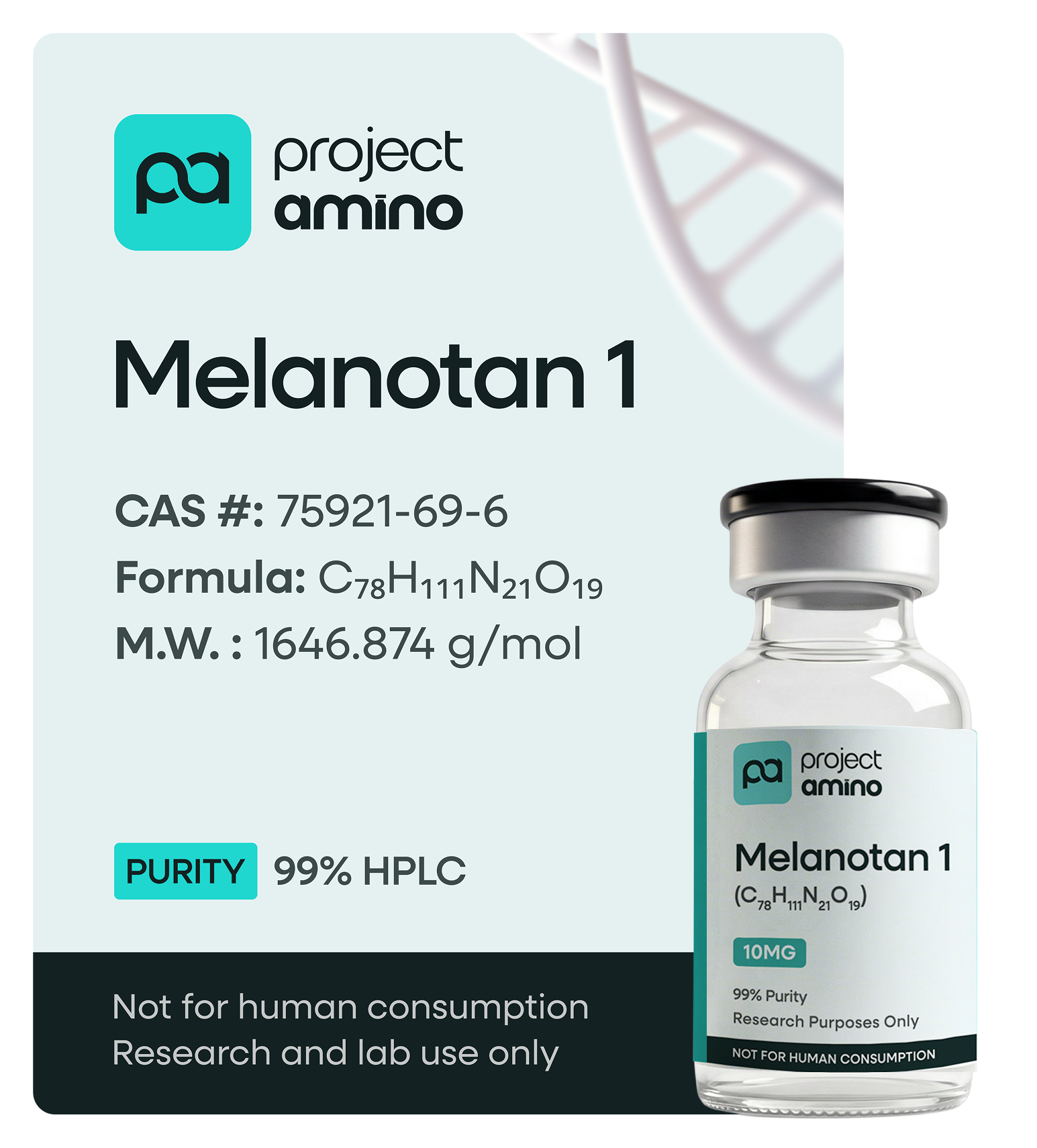
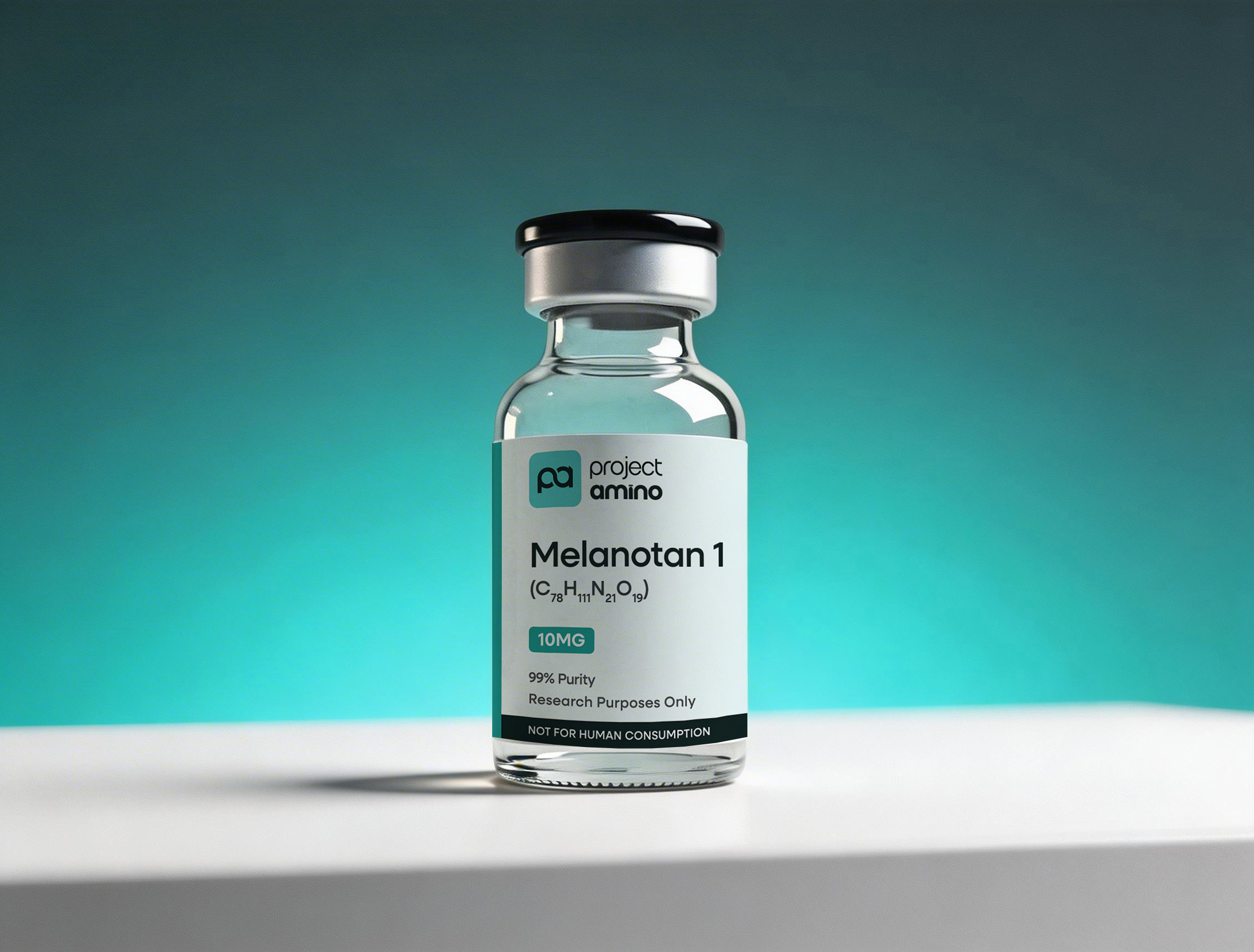
Melanotan 1 (MT-1), or afamelanotide, is a synthetic tridecapeptide analogue of alpha-melanocyte-stimulating hormone. Featuring a norleucine substitution at position 4 and a D-phenylalanine substitution at position 7, MT-1 enhances receptor binding and metabolic stability. It acts as a potent agonist at melanocortin receptors, particularly MC1R on melanocytes. This peptide is primarily utilized in research settings to explore melanogenesis and melanocortin pathways. For research use only. Not for human consumption.
Free Shipping on orders over $200
Melanotan 1 (MT-1), also known as afamelanotide, is a synthetic linear tridecapeptide analogue of alpha-melanocyte-stimulating hormone (alpha-MSH). It incorporates two key modifications relative to native alpha-MSH: a norleucine (Nle) substitution at position 4 and a D-phenylalanine (D-Phe) substitution at position 7, which collectively enhance receptor binding affinity and metabolic stability. MT-1 acts as a potent agonist at melanocortin receptor subtypes, with high selectivity for MC1R expressed on melanocytes. In research settings, it is studied for its ability to stimulate melanogenesis, modulate UV-related cellular responses, and influence immune and inflammatory signaling through melanocortin pathways. Approved in some jurisdictions for erythropoietic protoporphyria, it remains a research tool in the context of melanocortin biology. For research use only. Not for human consumption.
These products are for research use only and are not intended for human consumption, therapeutic use, or diagnostic purposes. All compounds described herein have not been approved by the FDA for human use. These products are strictly intended for in vitro laboratory research and analytical purposes when conducted by qualified research professionals in licensed facilities. Users are responsible for ensuring compliance with all applicable laws regarding purchase and use of these materials.
These products are for research use only and are not intended for human consumption, therapeutic use, or diagnostic purposes. All compounds described herein have not been approved by the FDA for human use. These products are strictly intended for in vitro laboratory research and analytical purposes when conducted by qualified research professionals in licensed facilities. Users are responsible for ensuring compliance with all applicable laws regarding purchase and use of these materials.