

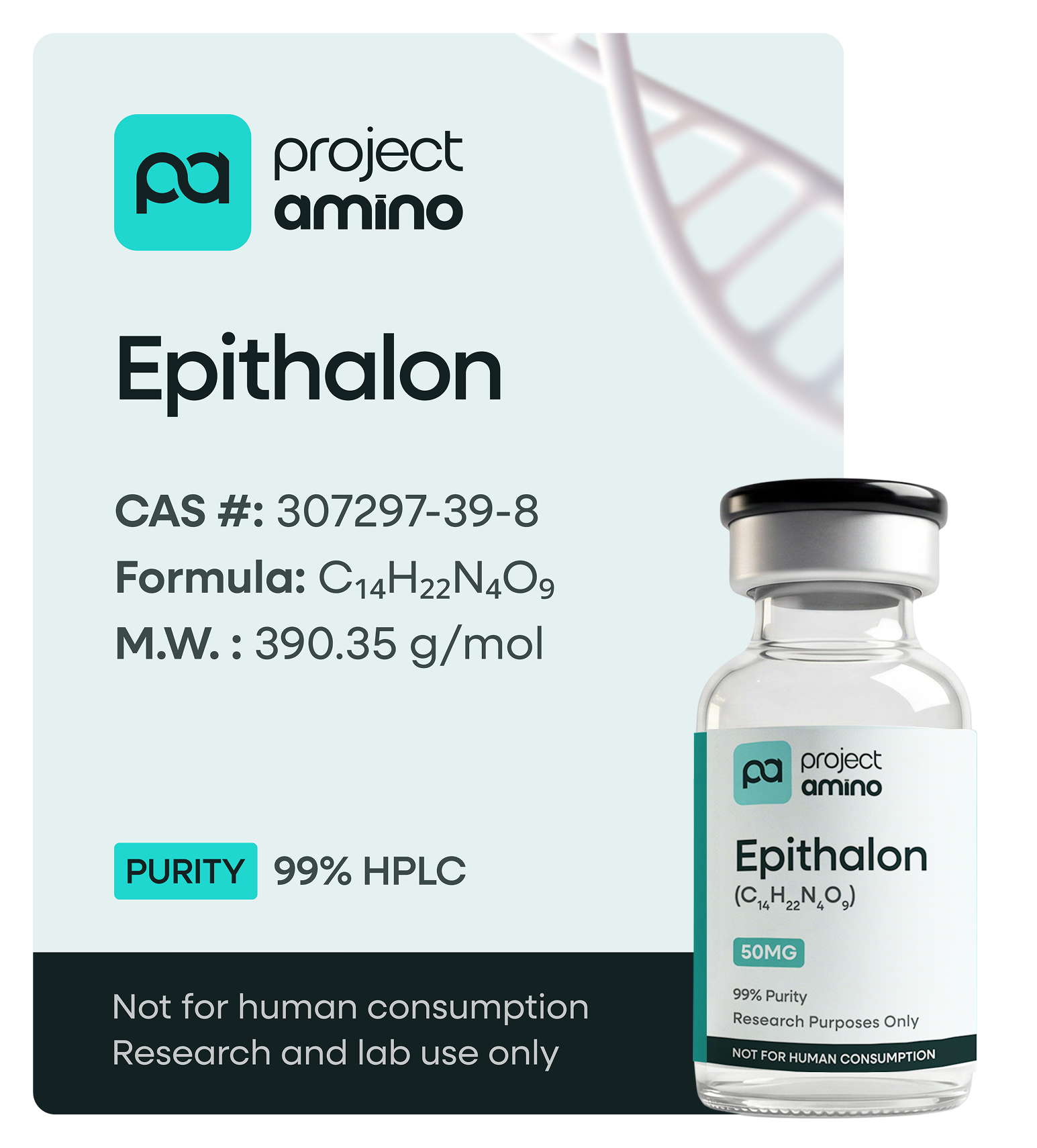
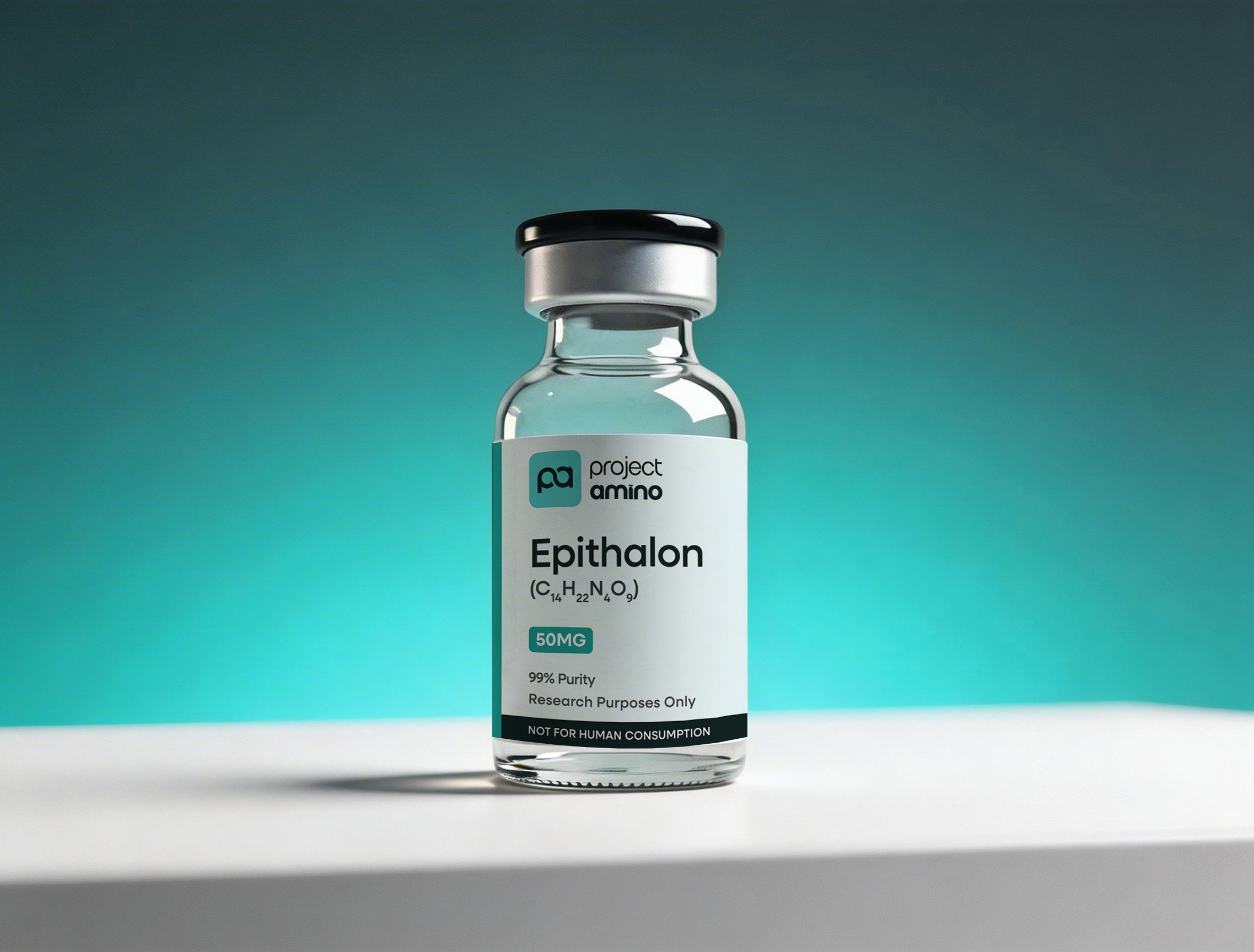
Epithalon, a synthetic tetrapeptide with the sequence Ala-Glu-Asp-Gly, was discovered by Russian scientist Vladimir Khavinson. This peptide, derived from the polypeptide Epithalamin found in the pineal gland, is of interest for its role in regulating telomerase expression, which is key to telomere maintenance. Research has explored Epithalon’s effects on oxidative stress, neuronal survival, circadian rhythms, and immune modulation, making it a valuable subject for studies in aging and neurodegeneration.
Free Shipping on orders over $200
Epithalon (also known as Epitalon or Epithalone) is a synthetic tetrapeptide with the amino acid sequence Ala-Glu-Asp-Gly, originally discovered by the Russian scientist Vladimir Khavinson. The peptide is a fragment of the polypeptide Epithalamin, which is extracted from the pineal gland and has been studied for its potential anti-aging and neuroprotective properties. Epithalon has been shown to regulate the expression of telomerase, an enzyme responsible for maintaining the length of telomeres, which play a crucial role in cellular aging and senescence. In vitro and animal studies have demonstrated Epithalon’s ability to increase telomere length, reduce the accumulation of oxidative stress-induced damage, and promote the survival of neurons under stressful conditions. The peptide has also been investigated for its effects on circadian rhythm regulation, melatonin production, and immune system modulation. Epithalon’s multiple biological activities and potential geroprotective effects make it a promising candidate for research in the fields of aging, neurodegeneration, and regenerative medicine.
These products are for research use only and are not intended for human consumption, therapeutic use, or diagnostic purposes. All compounds described herein have not been approved by the FDA for human use. These products are strictly intended for in vitro laboratory research and analytical purposes when conducted by qualified research professionals in licensed facilities. Users are responsible for ensuring compliance with all applicable laws regarding purchase and use of these materials.
These products are for research use only and are not intended for human consumption, therapeutic use, or diagnostic purposes. All compounds described herein have not been approved by the FDA for human use. These products are strictly intended for in vitro laboratory research and analytical purposes when conducted by qualified research professionals in licensed facilities. Users are responsible for ensuring compliance with all applicable laws regarding purchase and use of these materials.