

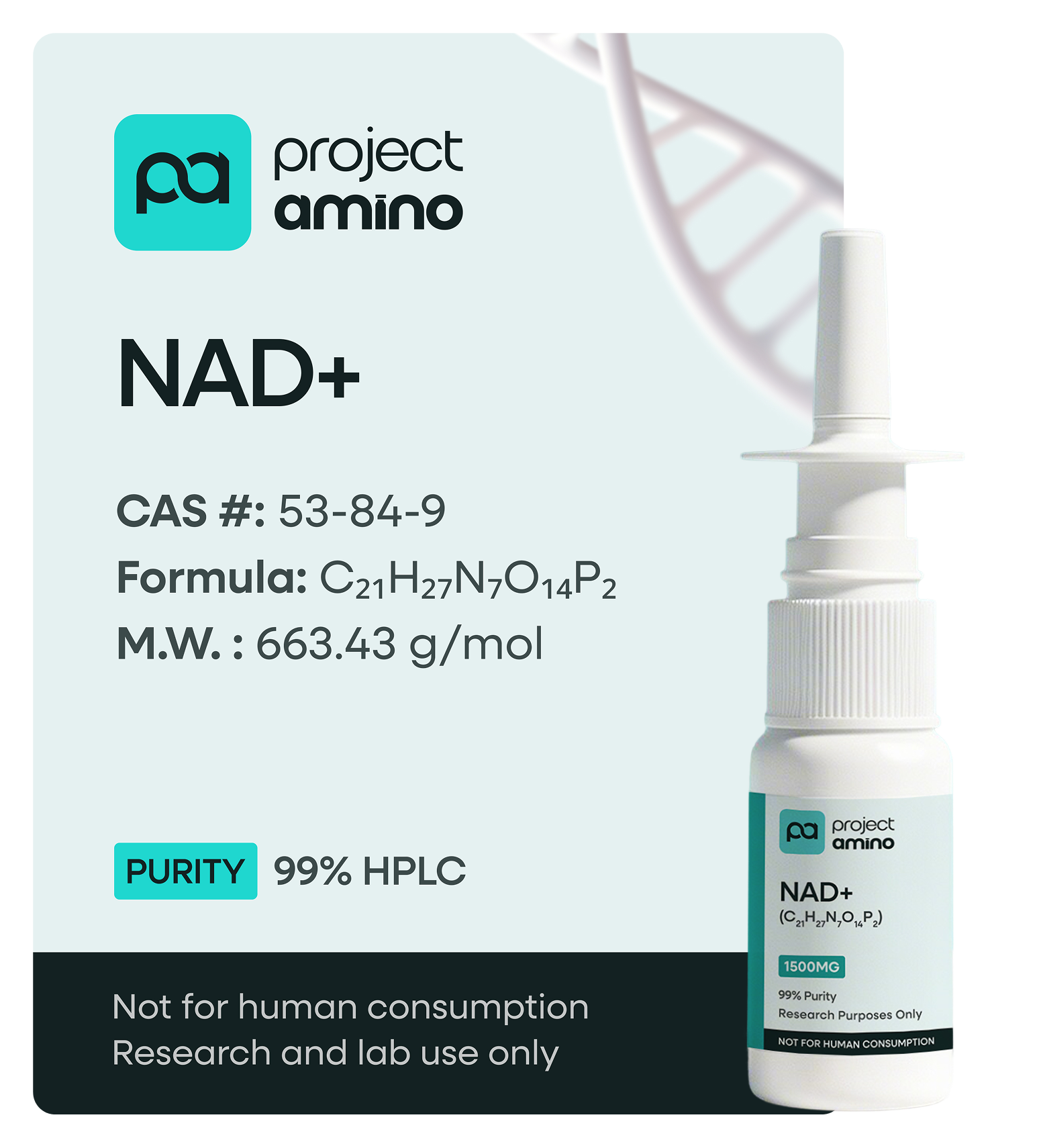

Nicotinamide adenine dinucleotide (NAD+) is a vital coenzyme present in all living cells, playing a crucial role in cellular metabolism and energy production. Composed of two nucleosides linked by a pyrophosphate, NAD+ acts as an essential electron carrier in oxidation-reduction reactions, cycling between its oxidized (NAD+) and reduced (NADH) forms. Additionally, NAD+ is a substrate for enzymes involved in DNA repair and cellular responses, with the NAD+/NADH ratio serving as a key regulator of intracellular redox potential.
Free Shipping on orders over $200
Nicotinamide adenine dinucleotide (NAD+) is a fundamental coenzyme found in all living cells, serving as a critical mediator of cellular metabolism and energy production. This dinucleotide consists of two nucleosides connected by a pyrophosphate linkage, with each nucleoside containing a ribose sugar attached to either an adenine or nicotinamide base. NAD+ functions as an essential electron carrier in oxidation-reduction reactions, cycling between its oxidized form (NAD+) and reduced form (NADH) to transfer electrons through metabolic pathways. Beyond its redox function, NAD+ serves as a substrate for enzymes involved in DNA repair and cellular stress responses. The NAD+/NADH ratio functions as a key regulator of intracellular redox potential, directly influencing downstream metabolic reactions.
These products are for research use only and are not intended for human consumption, therapeutic use, or diagnostic purposes. All compounds described herein have not been approved by the FDA for human use. These products are strictly intended for in vitro laboratory research and analytical purposes when conducted by qualified research professionals in licensed facilities. Users are responsible for ensuring compliance with all applicable laws regarding purchase and use of these materials.
These products are for research use only and are not intended for human consumption, therapeutic use, or diagnostic purposes. All compounds described herein have not been approved by the FDA for human use. These products are strictly intended for in vitro laboratory research and analytical purposes when conducted by qualified research professionals in licensed facilities. Users are responsible for ensuring compliance with all applicable laws regarding purchase and use of these materials.