

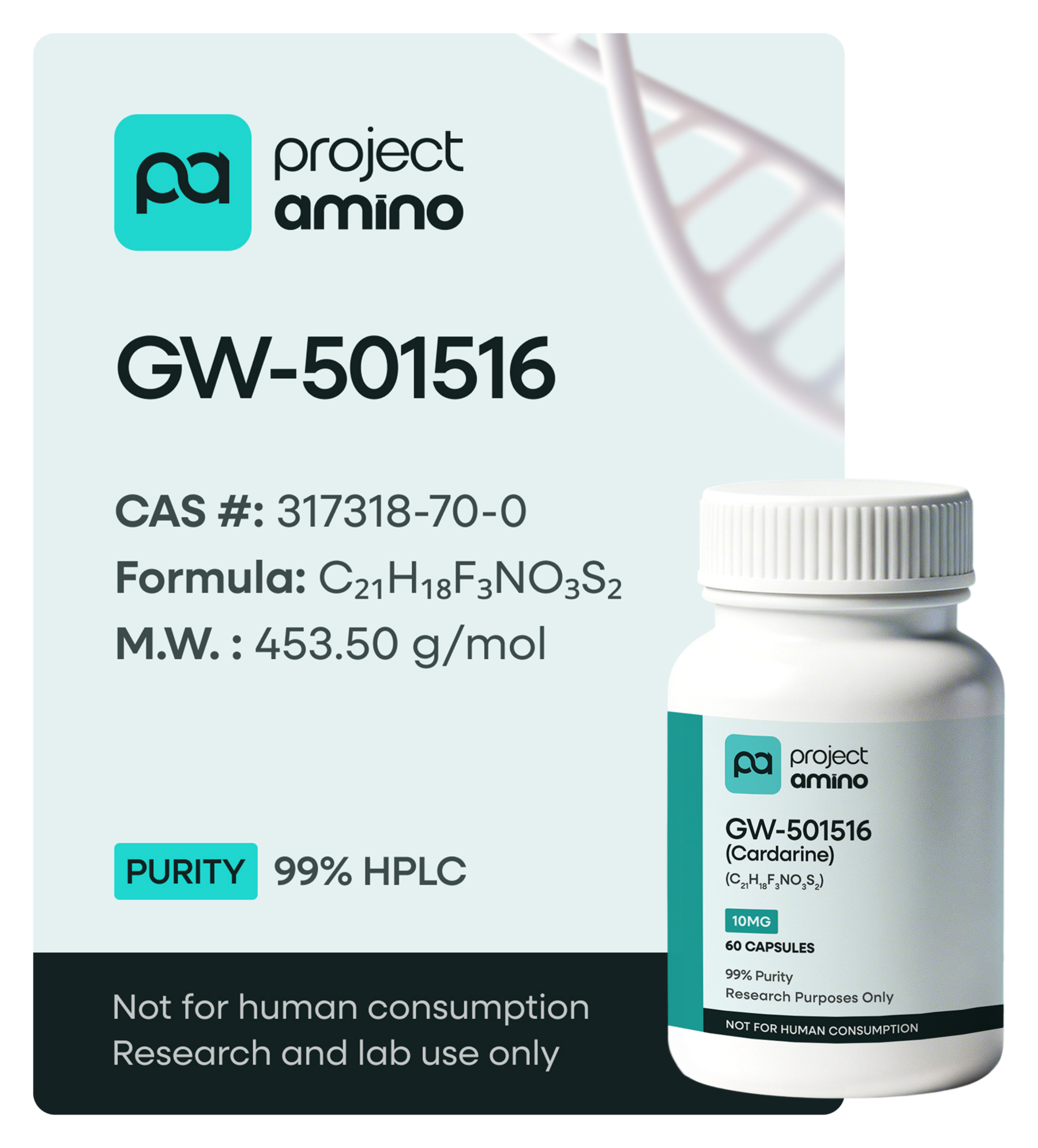
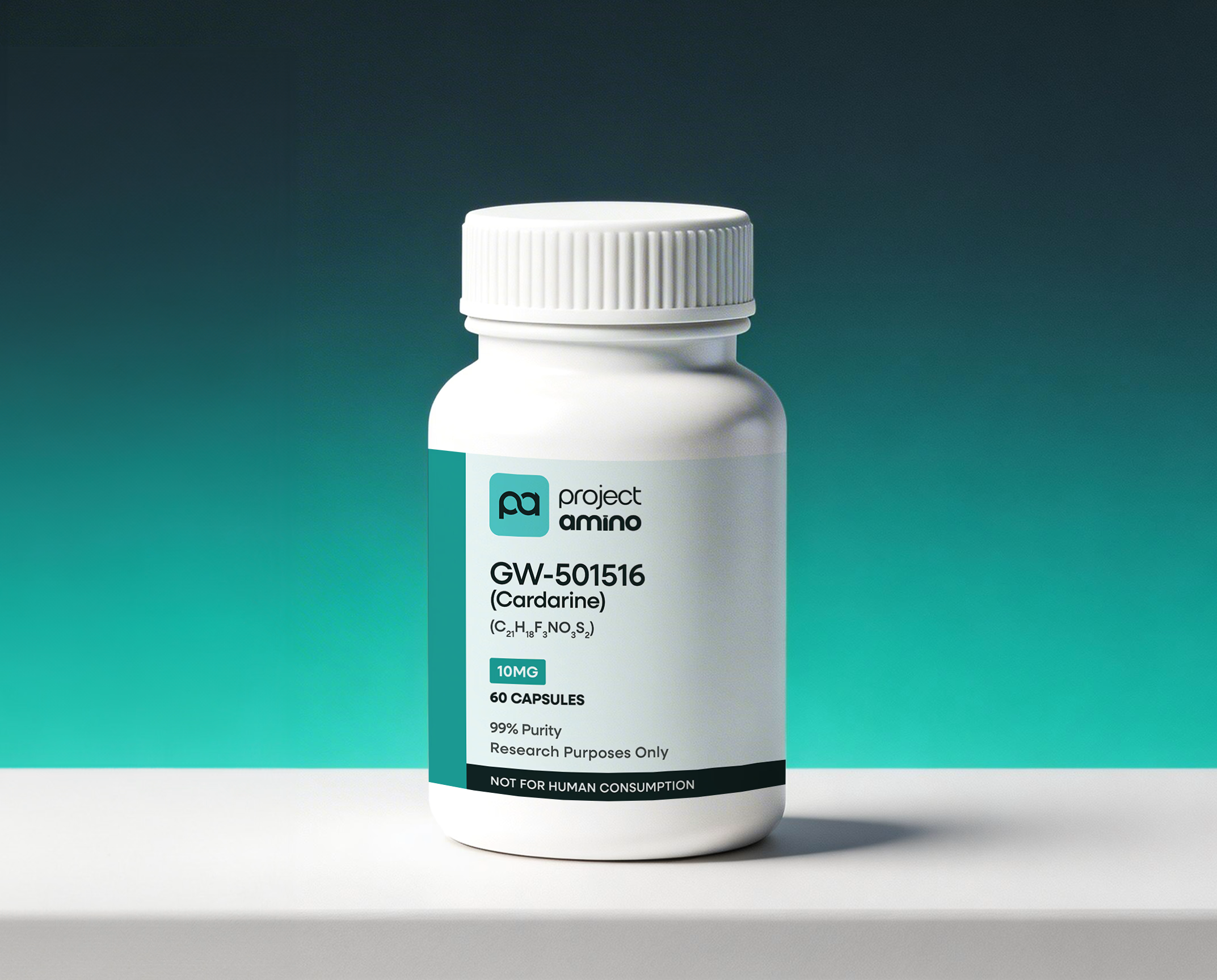
GW501516, or Cardarine, is a selective PPARdelta agonist known for its remarkable specificity. This thiazolidine compound activates delta receptors found primarily in skeletal muscle, influencing fatty acid oxidation and mitochondrial function. By reprogramming cellular fuel preferences from glucose to lipid oxidation, GW501516 plays a significant role in metabolic adaptation. It is widely utilized in research to investigate metabolic pathways and PPARdelta signaling dynamics, showcasing potential effects on lipid profiles and endurance in preclinical studies.
Free Shipping on orders over $200
GW501516, commonly known as Cardarine, is a selective peroxisome proliferator-activated receptor delta (PPARdelta) agonist with over 1000-fold selectivity for the delta isoform compared to PPARalpha and PPARgamma. This thiazolidine compound activates delta receptors predominantly expressed in skeletal muscle tissue, where it regulates fatty acid oxidation, mitochondrial biogenesis, and metabolic adaptation to endurance signaling. GW501516 activates genes encoding proteins involved in fat metabolism and mitochondrial function, effectively reprogramming cellular fuel preferences from glucose to lipid oxidation. Research demonstrates potent effects on lipid profiles, reduced hepatic fat accumulation, enhanced endurance capacity in preclinical models, and metabolic flexibility without significant oxidative stress induction. The compound serves as a pharmacological exercise mimetic in mechanistic research into metabolic disease pathways and PPARdelta signaling dynamics.
These products are for research use only and are not intended for human consumption, therapeutic use, or diagnostic purposes. All compounds described herein have not been approved by the FDA for human use. These products are strictly intended for in vitro laboratory research and analytical purposes when conducted by qualified research professionals in licensed facilities. Users are responsible for ensuring compliance with all applicable laws regarding purchase and use of these materials.
These products are for research use only and are not intended for human consumption, therapeutic use, or diagnostic purposes. All compounds described herein have not been approved by the FDA for human use. These products are strictly intended for in vitro laboratory research and analytical purposes when conducted by qualified research professionals in licensed facilities. Users are responsible for ensuring compliance with all applicable laws regarding purchase and use of these materials.